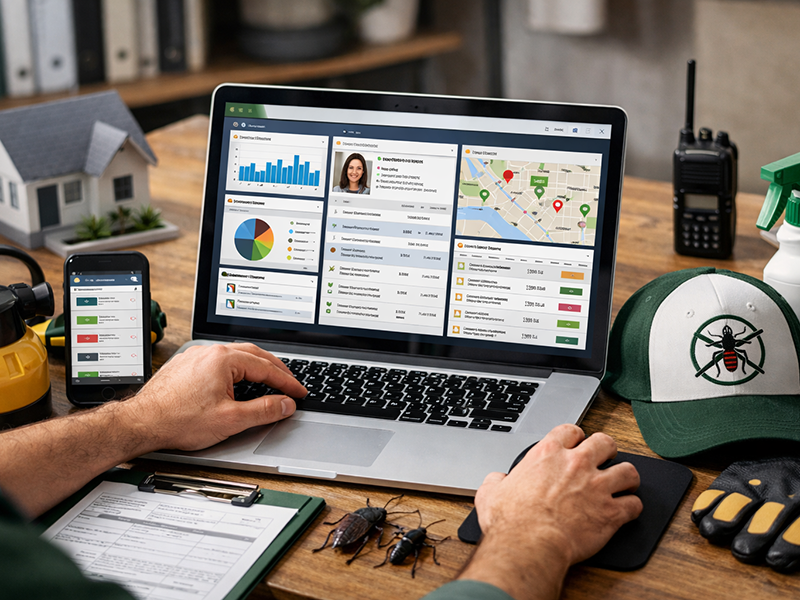
In today’s competitive service landscape, pest control companies must go beyond basic scheduling and invoicing to stay ahead. Customers expect timely service, clear communication, and consistent follow-ups—especially when dealing with recurring pest issues. This is where pest control CRM software becomes a game-changer.
A purpose-built CRM (Customer Relationship Management) system helps pest control businesses centralize operations, improve customer satisfaction, and drive long-term growth.
What is Pest Control CRM Software?
Pest control CRM software is a specialized platform designed to help pest management companies handle their daily operations efficiently. It goes beyond a generic CRM by including industry-specific features such as:
- Recurring service scheduling
- Technician dispatch management
- Treatment history tracking
- Automated reminders and follow-ups
- Invoicing and payment management
It acts as the central hub where customer data, service records, and business workflows come together.
Why Pest Control Businesses Need a CRM
Managing pest control operations manually or with disconnected tools can lead to missed appointments, poor customer experiences, and lost revenue.
A CRM system helps businesses:
- Stay organized with centralized customer data
- Improve service consistency
- Automate repetitive tasks
- Build stronger, long-term customer relationships
- Increase retention and recurring revenue
Key Features of Pest Control CRM Software
1. Customer Information Management
A CRM stores all customer details in one place, including:
- Contact information
- Property details
- Pest issues reported
- Service preferences
- Communication history
This ensures that technicians and office staff always have access to accurate, up-to-date information, enabling more personalized service.
2. Service History Tracking
Every service visit is recorded within the system, including:
- Type of pest treated
- Chemicals or methods used
- Technician notes
- Before/after observations
This historical data is critical for:
- Diagnosing recurring infestations
- Ensuring compliance and safety
- Providing better recommendations to customers
3. Recurring Treatment Scheduling
Pest control is rarely a one-time service. Many customers require:
- Monthly treatments
- Quarterly inspections
- Annual pest prevention plans
CRM software automates recurring scheduling so businesses can:
- Set up service cycles
- Automatically assign technicians
- Send reminders to customers
This reduces manual effort and ensures no service is missed.
4. Automated Follow-Ups and Reminders
Consistent communication is key to customer retention. A CRM enables:
- Automated appointment reminders (SMS/email)
- Post-service follow-ups
- Renewal reminders for annual contracts
- Feedback requests
These automated touchpoints help build trust and keep your brand top-of-mind.
5. Invoicing and Payment Management
CRM platforms streamline billing by allowing businesses to:
- Generate invoices instantly after service
- Track payment status
- Accept online payments
- Manage subscriptions and recurring billing
This improves cash flow and reduces administrative workload.
Typical Workflows in Pest Control CRM Systems
To truly understand the value of CRM software, let’s look at how pest control businesses use it in real-world workflows.
Workflow 1: New Customer Onboarding
- Customer inquiry received (call, website, or form)
- Customer details entered into CRM
- Inspection or service scheduled
- Technician assigned automatically
- Confirmation sent to customer
Result: Faster response time and a professional first impression.
Workflow 2: Service Execution and Documentation
- Technician receives job details via mobile app
- Performs inspection or treatment
- Updates service notes and uploads photos
- Marks job as completed
Result: Accurate records and improved service quality.
Workflow 3: Recurring Service Management
- Customer enrolled in a recurring plan
- CRM schedules future visits automatically
- Notifications sent before each visit
- Technician assigned based on availability
Result: Consistent service delivery without manual scheduling.
Workflow 4: Follow-Up and Customer Retention
- Automated follow-up sent after service
- Feedback collected
- Issues flagged and resolved quickly
- Renewal reminders triggered before contract expiry
Result: Higher customer satisfaction and retention.
Workflow 5: Billing and Payments
- Invoice generated after job completion
- Payment link sent to customer
- Payment tracked in CRM
- Reports generated for accounting
Result: Faster payments and fewer billing errors.
Benefits of Using Pest Control CRM Software
Improved Efficiency
Automating repetitive tasks frees up time for business growth.
Better Customer Experience
Timely communication and personalized service improve satisfaction.
Increased Revenue
Recurring services and better retention drive predictable income.
Data-Driven Decisions
Reports and analytics help optimize operations and marketing.
Choosing the Right Pest Control CRM
When selecting a CRM, look for:
- Industry-specific features
- Mobile access for field technicians
- Integration with payment systems
- Customizable workflows
- Scalability as your business grows
Final Thoughts
Pest control CRM software is no longer a luxury—it’s a necessity for businesses looking to scale efficiently and deliver exceptional service. By centralizing customer data, automating workflows, and improving communication, CRM systems empower pest control companies to build long-term relationships and drive sustainable growth.
Ready to Transform Your Pest Control Business?
If you’re looking to streamline your operations, improve customer satisfaction, and grow your recurring revenue, now is the time to invest in a powerful pest control CRM solution.
👉 Request pricing or book a demo today to see how the platform can transform your business.
Thinking of Launching a Platform Like This?
If you’re inspired to build a solution like a pest control CRM—or any digital product—having the right tech partner makes all the difference. Turnkey Infotech helps startups and businesses design and develop scalable digital platforms tailored to their goals.
Building a product like this requires thoughtful architecture, user-focused design, and strong development expertise to ensure it performs reliably as you grow.
They can help you build:
- Websites
- Ecommerce platforms
- Mobile apps
- SaaS platforms
- Marketplace platforms
- Custom software solutions
Whether you’re validating an idea or scaling an existing product, their team can guide you through the process—from concept to launch.
👉 Book a Free Consultation or Request a Free Demo to explore how your idea can turn into a powerful digital platform.