Launching a new product or platform is exciting—but also risky. Many startups and businesses fail not because their idea is bad, but because they build too much, too soon, without validating whether people actually want it.
That’s where product idea validation comes in.
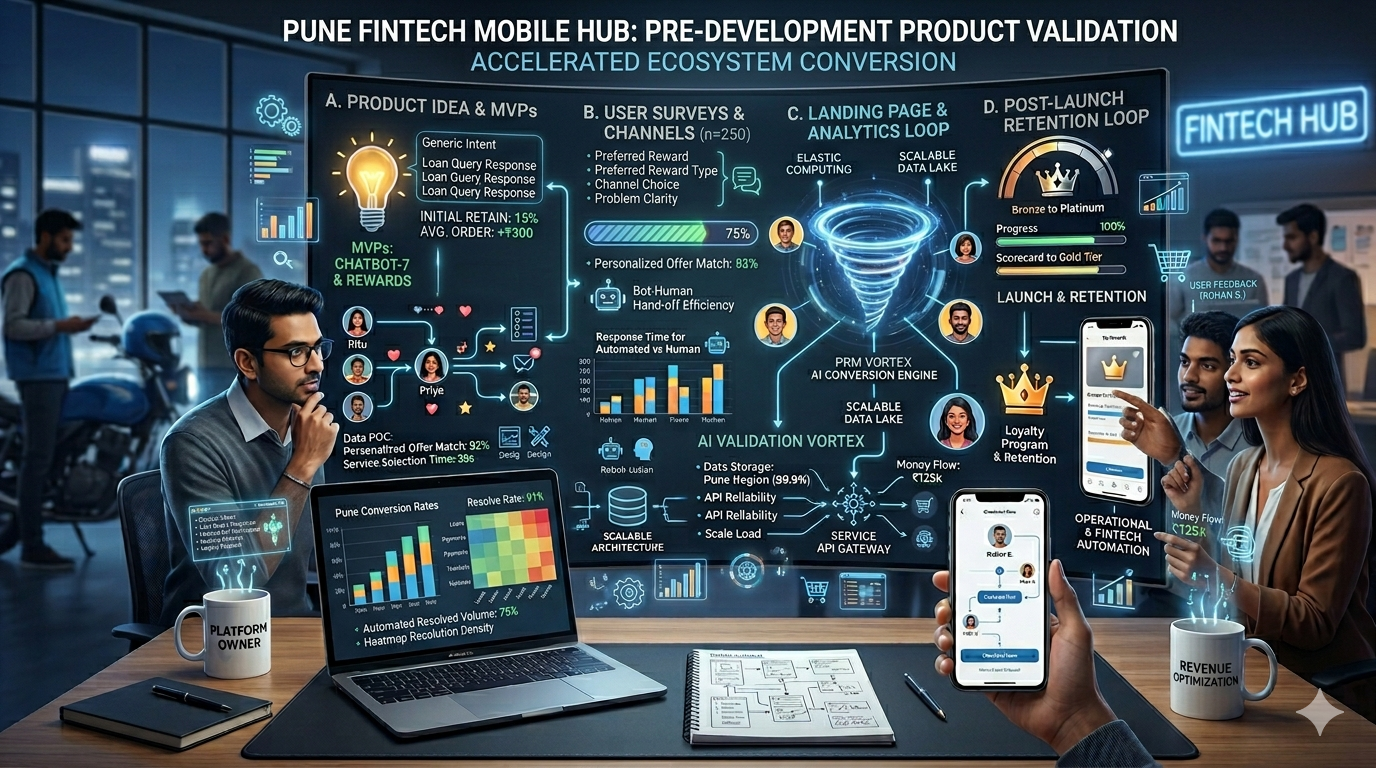
Before investing significant time and money into full-scale development, successful companies test their ideas using lean, practical methods. In this blog, we’ll explore how businesses validate product ideas using landing pages, MVPs, market research, and real user feedback.
Why Product Idea Validation Matters
Building a product without validation is like shooting in the dark. You may hit the target—but chances are, you won’t.
Validation helps you:
- Confirm real market demand
- Identify your target audience
- Avoid unnecessary development costs
- Refine your value proposition
- Build something people actually want
In short, validation reduces risk and increases your chances of success.
1. Testing Ideas with Landing Pages
One of the simplest ways to validate an idea is by creating a landing page.
How it works:
You build a single-page website that clearly explains your product idea, its benefits, and who it’s for. Then, you drive traffic using ads, social media, or email campaigns.
What to measure:
- Sign-ups or email subscriptions
- Click-through rates
- Pre-orders or early access requests
If people are willing to sign up or show interest, that’s a strong signal your idea has potential.
👉 Example: Many SaaS startups validate ideas by collecting emails before writing a single line of code.
2. Building a Minimum Viable Product (MVP)
An MVP (Minimum Viable Product) is a simplified version of your product with only core features.
Purpose:
To test your idea with real users without building the full platform.
Benefits:
- Faster time to market
- Lower development costs
- Real-world feedback early
Instead of building everything, you focus on solving one key problem really well.
👉 Example: Instead of launching a full marketplace, you might start with a basic platform connecting buyers and sellers manually.
3. Conducting Market Research
Before building anything, smart businesses invest time in understanding their market.
Key methods:
- Surveys and questionnaires
- Competitor analysis
- Industry trend research
- Customer interviews
What you learn:
- Who your customers are
- What problems they face
- How they currently solve those problems
- What gaps exist in the market
Market research ensures your idea is grounded in reality—not assumptions.
4. Gathering User Feedback Early
User feedback is one of the most valuable validation tools.
When to collect it:
- During idea stage
- After landing page launch
- While testing MVP
How to collect:
- Direct interviews
- Feedback forms
- Beta user groups
- Usability testing
Why it matters:
Users will tell you what works, what doesn’t, and what they actually need—often very different from what you assumed.
5. Iterating Based on Insights
Validation isn’t a one-time activity—it’s an ongoing process.
Once you gather data:
- Refine your idea
- Improve your messaging
- Adjust features
- Pivot if necessary
The goal is to continuously align your product with user needs before scaling.
Common Mistakes to Avoid
Many founders skip validation or do it incorrectly. Watch out for:
- Building too many features too early
- Ignoring negative feedback
- Relying only on opinions (not data)
- Targeting too broad an audience
- Falling in love with the idea instead of the problem
Final Thoughts
Product idea validation is not about slowing down—it’s about building smarter.
By testing your idea through landing pages, MVPs, market research, and user feedback, you reduce risk, save resources, and create products that truly resonate with your audience.
The most successful platforms aren’t built on assumptions—they’re built on validated insights.
Thinking of Launching a Platform Like This?
If you’re exploring a product idea or planning to build a digital platform, having the right technology partner can make all the difference.
Turnkey Infotech works with startups and businesses to design and develop scalable digital solutions—from concept to launch. Whether you’re validating an idea or ready to build, having the right architecture and development expertise ensures your platform is future-ready.
We can help you build:
- Websites
- Ecommerce platforms
- Mobile apps
- SaaS platforms
- Marketplaces
- Custom software solutions
If you have an idea and want to explore how it can be turned into a real product, this is a great time to take the next step.
👉 Book a Free Consultation or Request a Free Demo to discuss your idea and see how it can come to life.