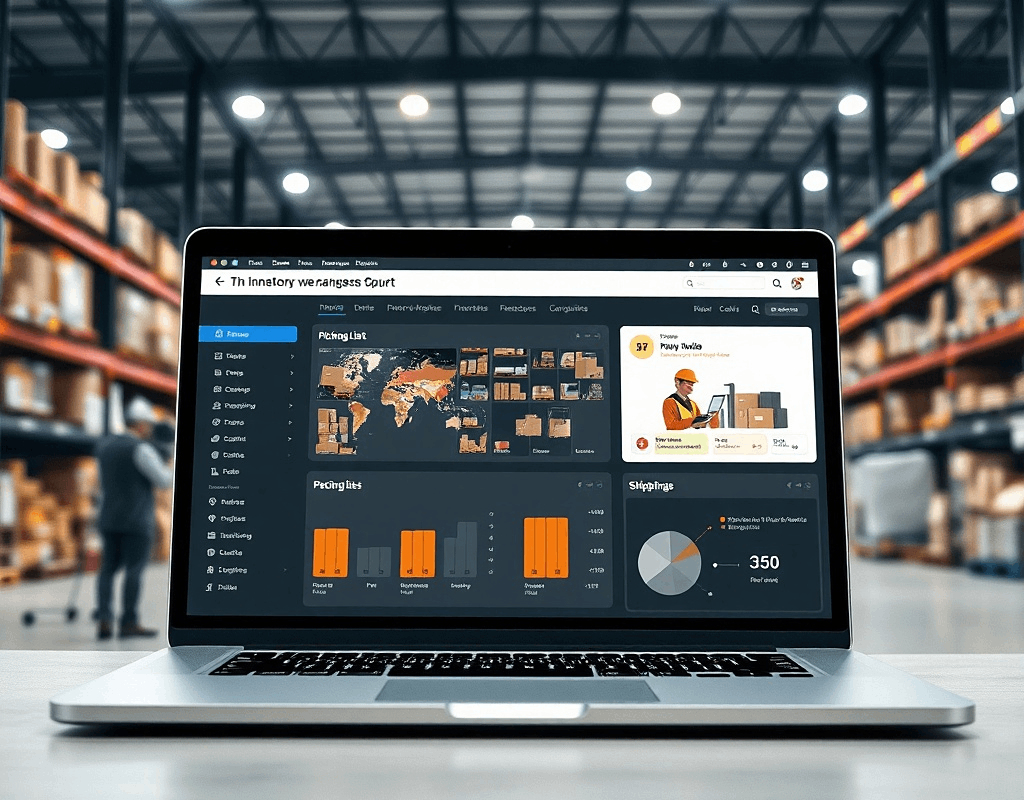
In today’s fast-paced supply chain environment, efficiency inside the warehouse can make or break a business. Whether you’re running a retail operation, an ecommerce store, or a distribution center, managing inventory manually is no longer practical. This is where warehouse management software (WMS) comes into play.
A modern WMS helps businesses digitize and optimize every aspect of warehouse operations—from product storage to order fulfillment—ensuring accuracy, speed, and scalability.
What is Warehouse Management Software?
Warehouse management software is a digital solution that helps businesses control and monitor daily warehouse operations. It provides real-time visibility into inventory, automates workflows, and improves coordination across storage, picking, packing, and shipping processes.
Instead of relying on spreadsheets or manual tracking, businesses use WMS platforms to streamline operations and reduce human error.
How Warehouses Track Product Storage
One of the core functions of a WMS is efficient product storage and location tracking.
Key Capabilities:
- Bin & Location Management: Every product is assigned a specific storage location (rack, shelf, or bin), making it easy to locate items instantly.
- Barcode & RFID Scanning: Warehouse staff use scanners to track inventory movement in real time.
- Real-Time Inventory Updates: Stock levels automatically update whenever items are received, moved, or shipped.
- Space Optimization: The system suggests optimal storage locations based on product size, demand, and turnover rate.
Example:
In a retail warehouse, fast-moving items like seasonal clothing are stored closer to dispatch areas, while slow-moving stock is placed deeper in the warehouse—all managed by the software.
Optimizing Order Picking
Order picking is one of the most labor-intensive processes in a warehouse. A WMS simplifies this by guiding workers efficiently.
How It Works:
- Pick Lists Generation: The system automatically creates optimized pick lists based on incoming orders.
- Route Optimization: Workers are guided through the shortest path in the warehouse.
- Batch Picking: Multiple orders are grouped together to reduce trips.
- Error Reduction: Barcode scanning ensures the right product is picked every time.
Example:
An ecommerce warehouse handling hundreds of daily orders uses WMS to assign pick routes, reducing picking time and improving accuracy during peak sales.
Streamlining Packing Operations
Once items are picked, the next step is packing—and WMS ensures this process is just as efficient.
Features:
- Automated Packing Instructions: The system suggests appropriate packaging based on product size and type.
- Quality Checks: Items are scanned again to verify order accuracy.
- Label Generation: Shipping labels and invoices are generated automatically.
- Packing Station Integration: Software connects with packing stations for a seamless workflow.
Example:
A business selling fragile electronics uses WMS to ensure proper packaging materials are used, reducing damage during transit.
Managing Shipping and Dispatch
Shipping is the final and critical stage where speed and accuracy matter most.
How WMS Helps:
- Carrier Integration: Connects with logistics providers for real-time shipping updates.
- Order Tracking: Customers receive tracking information instantly.
- Dispatch Scheduling: Orders are prioritized and scheduled efficiently.
- Documentation Automation: Generates shipping manifests, invoices, and compliance documents.
Example:
An ecommerce brand integrates its WMS with courier partners to automatically assign shipments and share tracking details with customers, improving delivery transparency.
Benefits of Using Warehouse Management Software
Implementing a WMS delivers measurable improvements across operations:
- Improved Accuracy: Minimizes errors in picking and shipping
- Faster Order Fulfillment: Speeds up processing and delivery times
- Real-Time Visibility: Provides instant insights into inventory levels
- Reduced Operational Costs: Optimizes labor and storage utilization
- Scalability: Supports business growth without operational bottlenecks
Real-World Use Cases
Retail Warehouses
Retailers use WMS to manage seasonal inventory, track stock across multiple locations, and ensure shelves are always stocked.
Ecommerce Businesses
Online stores rely on WMS for fast order processing, real-time inventory sync, and seamless shipping integrations.
Third-Party Logistics (3PL)
3PL providers use advanced WMS platforms to manage multiple clients, warehouses, and complex logistics workflows from a single system.
Why Digital Warehouse Management is Essential
As customer expectations for faster deliveries and real-time updates grow, manual processes simply can’t keep up. Warehouse management software empowers businesses to operate with precision, efficiency, and agility.
Whether you’re handling hundreds or thousands of orders daily, a WMS ensures your warehouse becomes a competitive advantage rather than a bottleneck.
Thinking of Launching a Platform Like This?
If you’re exploring the idea of building a warehouse or logistics platform, having the right technology partner can make all the difference. Turnkey Infotech helps startups and businesses design and develop powerful digital products—from websites to scalable SaaS platforms.
Building a system like a warehouse management solution requires thoughtful architecture, seamless integrations, and user-friendly design to ensure it performs reliably at scale.
Here’s what Turnkey Infotech can help you build:
- Websites
- Ecommerce platforms
- Mobile apps
- SaaS platforms
- Marketplace platforms
- Custom software solutions
If you have an idea in mind, this is a great time to explore it further. You can book a free consultation to discuss your vision or request a demo to understand how such a platform can be built and scaled effectively.
Take the first step—Request a Free Demo or Book a Free Consultation today.