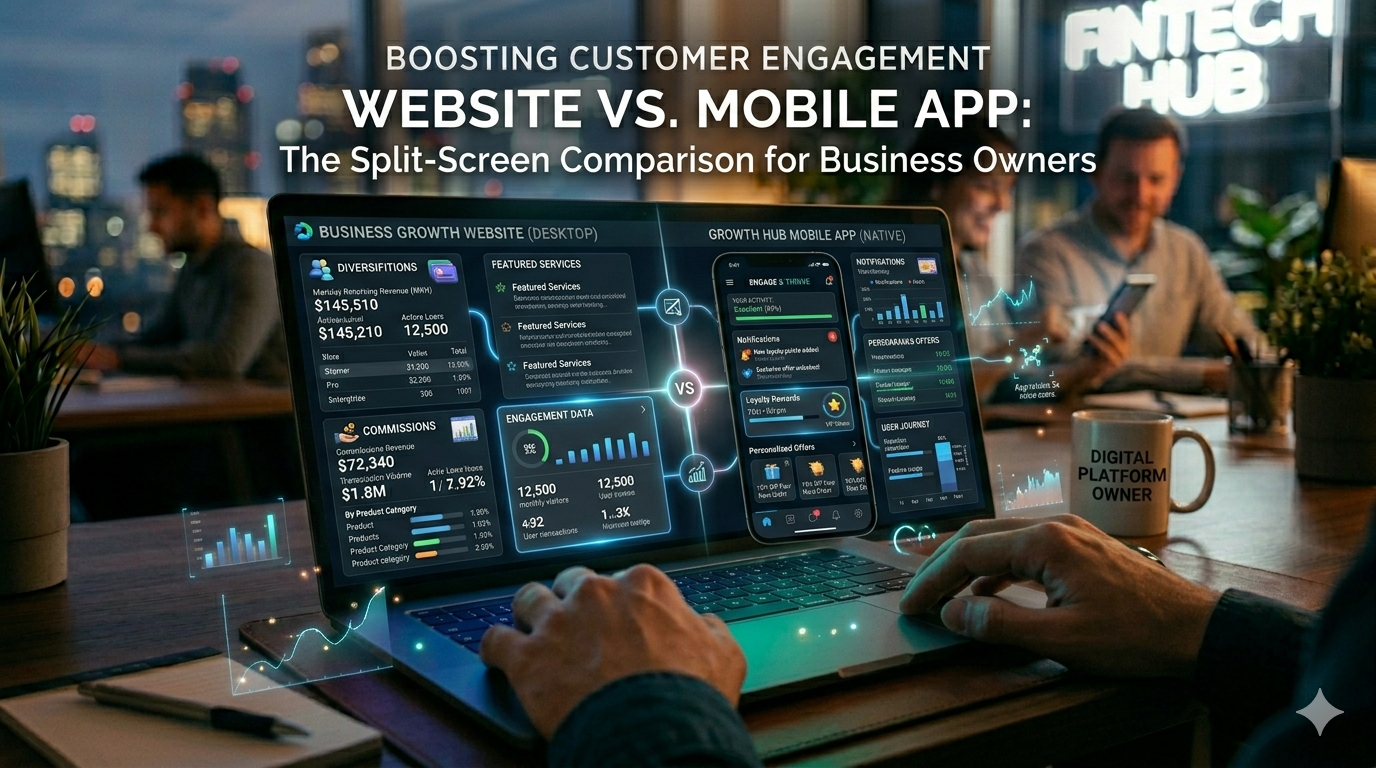
In today’s digital-first world, businesses often face a critical decision: Should you invest in a website, a mobile app, or both? While both platforms serve as powerful digital touchpoints, they cater to different user behaviors, business goals, and growth strategies.
This guide breaks down the key differences between websites and mobile apps, helping you decide what’s best for your business.
Understanding the Basics
What is a Website?
A website is a browser-based platform accessible across devices (desktop, tablet, mobile) via the internet. It’s typically the first digital presence for most businesses.
What is a Mobile App?
A mobile app is a software application installed on a user’s smartphone, designed to deliver a more personalized, faster, and interactive experience.
Website vs Mobile App: Key Differences
| Feature | Website | Mobile App |
| Accessibility | Accessible via browser, no installation needed | Requires download and installation |
| Cost of Development | Lower initial cost | Higher due to platform-specific development (iOS/Android) |
| User Experience | Good, but limited by browser | Superior, highly interactive and personalized |
| Performance | Depends on internet speed | Faster and smoother (can work partially offline) |
| Maintenance | Easier to update centrally | Requires updates and app store approvals |
| Reach | Wider reach (any device with internet) | Limited to smartphone users |
| Engagement | Lower engagement | Higher engagement (push notifications, personalization) |
| SEO & Discoverability | Search engine visibility | App store optimization needed |
Advantages of a Website
A website is often the foundation of your digital strategy, and for good reason:
1. Wider Reach
Anyone with internet access can find your website via search engines, making it ideal for brand visibility and lead generation.
2. Cost-Effective
Websites are generally less expensive to build and maintain compared to mobile apps.
3. No Installation Required
Users can instantly access your platform without the friction of downloading an app.
4. SEO Benefits
Websites can rank on search engines, driving organic traffic over time.
Advantages of a Mobile App
Mobile apps shine when it comes to user engagement and experience:
1. Better User Experience
Apps offer smoother navigation, faster loading times, and a more intuitive interface.
2. Personalization
Apps can store user preferences and behavior, enabling highly customized experiences.
3. Push Notifications
Direct communication through notifications helps improve retention and engagement.
4. Offline Access
Many app features can work without an internet connection.
Cost Considerations
Website Costs
- Development: Lower
- Maintenance: Lower
- Hosting & domain costs apply
- Single platform build (responsive design)
Mobile App Costs
- Development: Higher (especially for both iOS and Android)
- Maintenance: Ongoing updates required
- App store fees
- Backend infrastructure often needed
👉 Insight: If you’re a startup or validating an idea, starting with a website is usually more practical.
User Behavior: Website vs App
Understanding how users interact with each platform is key:
Website Users
- Often discover businesses via search engines
- Browse casually or for information
- Lower commitment level
App Users
- Already trust or frequently use your service
- Expect speed and convenience
- Engage more frequently and deeply
👉 Example: Users may browse products on a website, but prefer using an app for repeat purchases.
When Should You Choose a Website?
A website is the right choice if:
- You’re launching a new business or startup
- You want to build brand visibility and SEO presence
- Your budget is limited
- Your platform is primarily informational or content-driven
- You want to validate your idea before scaling
When Should You Build a Mobile App?
A mobile app makes sense when:
- You have an established user base
- Your business depends on frequent user interaction
- You need features like push notifications, real-time updates, or offline access
- You want to improve customer retention and engagement
- You’re building a platform-based product (marketplace, SaaS tool, social app)
Best Strategy: Website + Mobile App
For many businesses, the ideal approach is not choosing one over the other—but combining both:
- Use your website for discovery and acquisition
- Use your mobile app for engagement and retention
This hybrid strategy allows you to maximize reach while delivering a premium user experience.
Final Thoughts
Choosing between a website and a mobile app isn’t just about technology—it’s about your business goals, audience behavior, and growth stage.
- Start simple with a website if you’re early-stage
- Scale into a mobile app as your user base and needs grow
- Eventually, integrate both for a seamless digital ecosystem
Thinking of Launching a Platform Like This?
If you’re exploring an idea for a digital product, having the right technology partner can make all the difference.
Turnkey Infotech helps startups and businesses design and build scalable digital solutions—from simple websites to complex platforms. Whether you’re validating an idea or scaling an existing product, choosing the right architecture and development approach is crucial.
Here’s what they can help you build:
- Websites
- Ecommerce platforms
- Mobile apps
- SaaS platforms
- Marketplace platforms
- Custom software solutions
If you have an idea in mind, it’s worth discussing how it can be brought to life in a practical, scalable way.
👉 Book a Free Consultation or Request a Demo to explore your concept and understand the roadmap to building your platform.