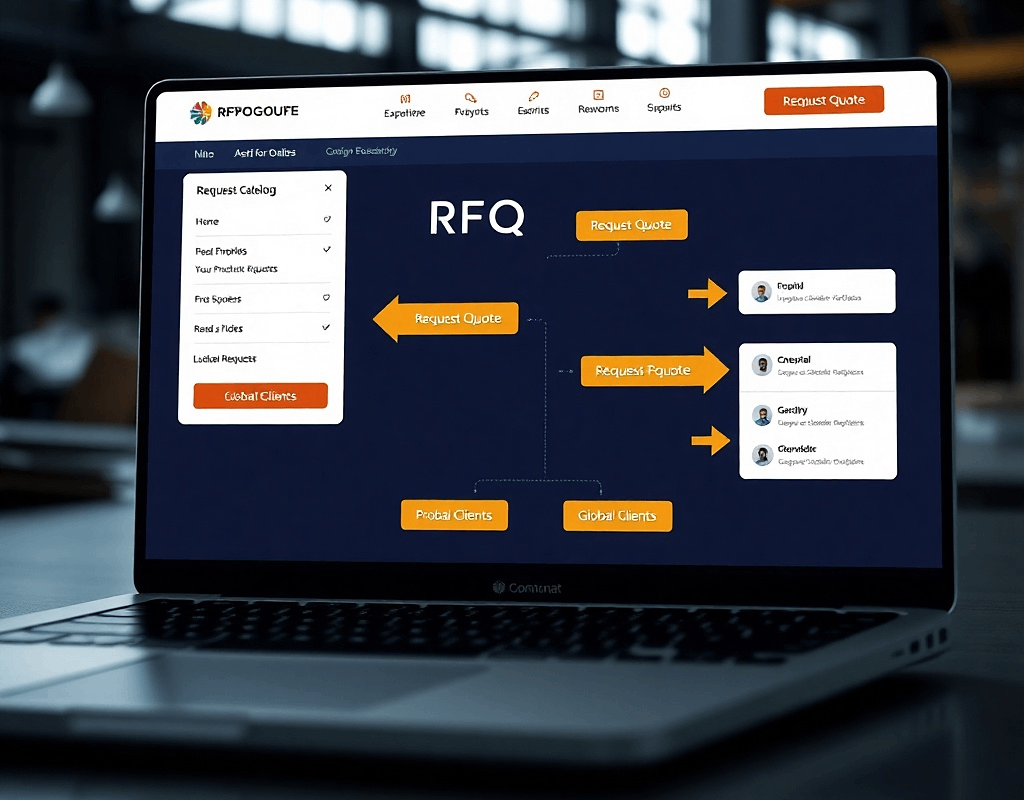
In today’s fast-paced B2B environment, speed, transparency, and efficiency are everything. Whether you’re sourcing raw materials, manufacturing components, or professional services, businesses need a streamlined way to request and compare quotes. That’s where an RFQ (Request-for-Quote) system website becomes a game-changer.
This article breaks down how RFQ systems work, the key components behind them, and how companies use them to manage leads and procurement more effectively.
What is an RFQ System Website?
An RFQ system website is a digital platform that allows buyers to submit detailed requests for products or services and receive quotes from multiple vendors.
Instead of long email chains or manual follow-ups, everything happens in one centralized system—making the process faster, more organized, and scalable.
How RFQ Systems Work (Step-by-Step)
1. Buyer Submits a Request
The process begins when a buyer fills out an RFQ form. This typically includes:
- Product or service details
- Quantity and specifications
- Budget (optional)
- Timeline or delivery requirements
- Attachments (drawings, documents, etc.)
2. Request is Sent to Vendors
Once submitted, the RFQ is:
- Shared with selected vendors, or
- Broadcast to multiple suppliers in a marketplace-style platform
3. Vendors Respond with Quotes
Vendors review the request and submit their quotations, including:
- Pricing
- Lead time
- Terms & conditions
- Additional notes or alternatives
4. Buyer Compares and Chooses
The buyer compares responses within the system and selects the best vendor based on price, quality, or delivery timeline.
5. Conversion to Order or Lead
The RFQ can then be:
- Converted into a purchase order
- Tracked as a qualified sales lead
Key Components of an RFQ System Website
1. Smart RFQ Forms
RFQ forms are the backbone of the platform. A well-designed form ensures clarity and reduces back-and-forth communication.
Features of effective RFQ forms:
- Dynamic fields (change based on category)
- File upload support
- Auto-fill for repeat customers
- Validation rules to ensure complete submissions
The goal is simple: capture all the necessary details upfront.
2. Vendor & Buyer Dashboards
Dashboards provide a centralized view of all activities.
Buyer Dashboard:
- View submitted RFQs
- Track responses
- Compare quotes side-by-side
- Manage vendors
Vendor Dashboard:
- View incoming RFQs
- Submit quotes
- Track status (pending, accepted, rejected)
- Manage communication
Dashboards turn a complex process into a clear, actionable workflow.
3. Lead Management System
An RFQ system isn’t just a procurement tool—it’s also a powerful lead generation engine.
Every RFQ represents a potential business opportunity.
Lead management features include:
- Lead tracking (new, contacted, converted)
- CRM integration
- Automated notifications
- Follow-up reminders
- Analytics and reporting
For service providers and manufacturers, this becomes a structured pipeline of high-intent leads.
4. Communication & Notifications
Timely communication is critical.
Modern RFQ systems include:
- In-platform messaging
- Email and SMS notifications
- Status updates (quote received, accepted, etc.)
This reduces delays and keeps both parties aligned.
5. Analytics & Insights
Businesses can use RFQ data to make smarter decisions:
- Which vendors respond fastest?
- Average quote values
- Conversion rates
- Demand trends
These insights help improve both sourcing strategies and sales performance.
Benefits of an RFQ System Website
For Buyers:
- Faster sourcing process
- Multiple competitive quotes
- Better decision-making
- Reduced manual work
For Vendors:
- Access to qualified leads
- Increased visibility
- Structured sales process
- Higher conversion potential
Use Cases Across Industries
RFQ systems are widely used in:
- Manufacturing & industrial sourcing
- Construction & contracting
- IT and software services
- Logistics and supply chain
- Wholesale and distribution
Any business that relies on quotations can benefit from digitizing this workflow.
Why Businesses Are Moving to RFQ Platforms
Traditional quoting methods—emails, calls, spreadsheets—are inefficient and hard to scale. RFQ platforms solve this by:
- Centralizing data
- Automating workflows
- Improving transparency
- Enabling faster decision-making
In short, they transform fragmented processes into structured systems.
Thinking of Launching a Platform Like This?
If you’re an entrepreneur or business owner, an RFQ system can evolve into a powerful digital product—whether as a niche marketplace, SaaS platform, or internal business tool.
Turnkey Infotech works with startups and growing businesses to design and develop scalable digital solutions—from idea to launch. Building a platform like this isn’t just about coding; it requires the right architecture, user experience, and long-term scalability.
What we can help you build:
- Websites
- Ecommerce platforms
- Mobile apps
- SaaS platforms
- Marketplace platforms
- Custom software solutions
If you’ve been thinking about turning your idea into a real product, this is a great place to start.
👉 Book a Free Consultation or Request a Free Demo to explore how your RFQ platform (or any digital idea) can be designed and built effectively.