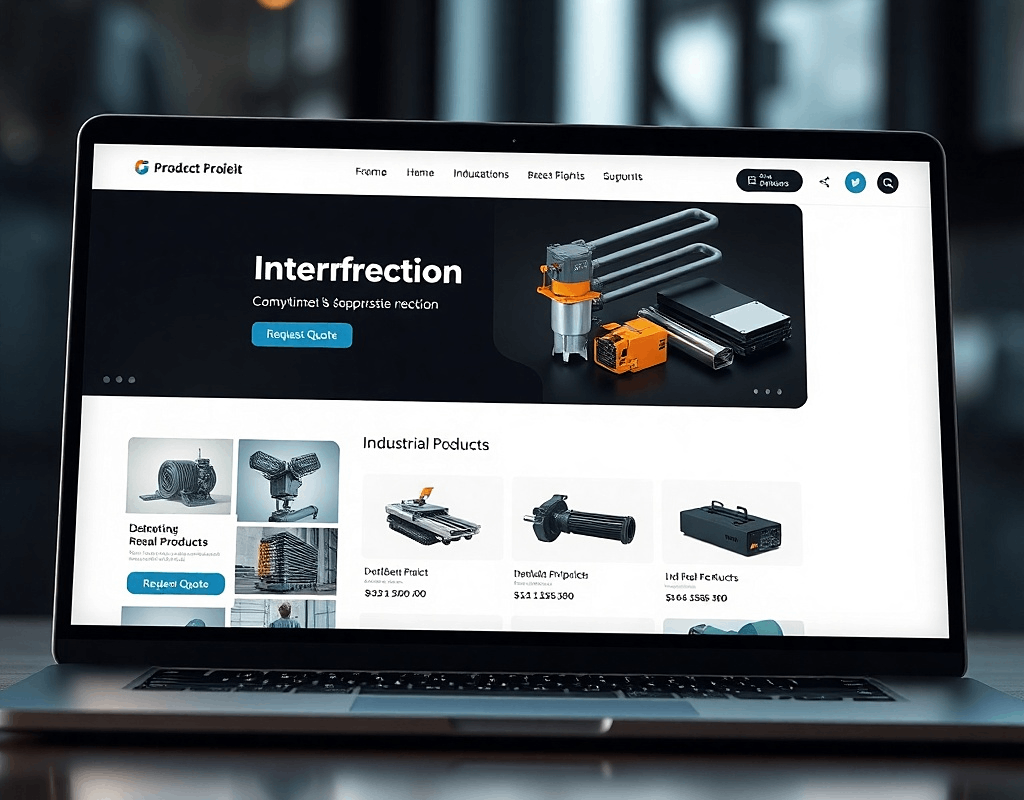
In today’s digital-first economy, a product catalog website has become an essential asset for manufacturers and exporters looking to expand their reach and generate consistent B2B enquiries. Gone are the days when printed brochures and trade exhibitions were the only ways to showcase products. Modern buyers now research, compare, and shortlist suppliers online before even making contact.
A well-designed product catalog website acts as a digital showroom, allowing businesses to present their offerings, specifications, and capabilities to a global audience—24/7.
In this blog, we’ll explore how manufacturers and exporters use catalog websites effectively, what features make them successful, and how they help generate real business enquiries.
What is a Product Catalog Website?
A product catalog website is a digital platform that showcases a company’s products in a structured and searchable format. Unlike traditional ecommerce websites, these platforms may or may not include direct online purchasing. Instead, their primary goal is to:
- Display product information in detail
- Highlight specifications and capabilities
- Provide downloadable brochures or catalogs
- Enable enquiry-based interactions
These websites are especially popular in B2B industries where buyers need detailed information before making purchasing decisions.
Why Manufacturers & Exporters Need Catalog Websites
1. Global Visibility
Manufacturers and exporters often serve international markets. A product catalog website allows them to:
- Reach buyers across countries
- Showcase export capabilities
- Present certifications and compliance standards
This helps businesses move beyond local markets and tap into global demand.
2. Organized Product Presentation
A catalog website helps organize large product inventories into:
- Categories and subcategories
- Product collections
- Industry-specific solutions
For example, a machinery manufacturer can categorize products into industrial machines, spare parts, and automation systems, making navigation easier for buyers.
3. Detailed Product Specifications
B2B buyers require technical clarity before making decisions. Catalog websites provide:
- Product dimensions and materials
- Technical specifications
- Usage instructions
- Compliance certifications
This reduces back-and-forth communication and speeds up the buying process.
4. Downloadable Brochures & Catalogs
One of the most powerful features of a product catalog website is the ability to offer:
- PDF brochures
- Technical datasheets
- Product catalogs
These downloadable assets allow buyers to:
- Share information internally
- Evaluate products offline
- Compare multiple vendors
5. Lead Generation Through Enquiries
Instead of direct checkout, most catalog websites focus on enquiry generation. Features include:
- “Request a Quote” forms
- “Enquire Now” buttons
- Contact forms with product selection
This approach works well for high-value or customized products where pricing depends on requirements.
Key Features of an Effective Product Catalog Website
To truly drive results, a catalog website must go beyond basic product listings. Here are the essential features:
1. Advanced Product Filters
Buyers should be able to filter products by:
- Category
- Specifications
- Industry use
- Price range (optional)
This improves user experience and helps buyers find relevant products quickly.
2. High-Quality Visuals
Images and videos play a crucial role in B2B decision-making:
- Product images from multiple angles
- Usage videos or demos
- Factory or production visuals
This builds trust and credibility.
3. Search Functionality
A powerful search feature allows users to:
- Find products by name or SKU
- Search by specifications
- Quickly navigate large catalogs
4. Enquiry & Quote System
Instead of a cart system, catalog websites typically include:
- Inquiry forms linked to specific products
- Bulk enquiry options
- File upload for custom requirements
5. Brochure Download Section
A dedicated section for:
- Product catalogs
- Company profiles
- Certifications
This is especially useful for exporters dealing with international clients.
6. Mobile-Friendly Design
Many buyers browse on mobile devices. A responsive design ensures:
- Smooth navigation
- Faster loading
- Better engagement
7. SEO Optimization
A catalog website optimized for search engines helps businesses:
- Rank for product-related keywords
- Attract organic traffic
- Generate inbound enquiries
How Catalog Websites Generate B2B Enquiries
A product catalog website is not just informational—it’s a lead generation engine. Here’s how it works:
1. Organic Search Traffic
When optimized properly, catalog websites rank for keywords like:
- “industrial pumps manufacturer”
- “export quality furniture supplier”
- “custom packaging solutions”
This brings in highly relevant B2B visitors.
2. Product-Focused Landing Pages
Each product page acts as a landing page, offering:
- Detailed descriptions
- Technical specs
- Inquiry options
This increases the chances of conversion.
3. Trust Building
A professional catalog website builds trust through:
- Certifications
- Client testimonials
- Case studies
- Export experience
Buyers are more likely to enquire when they trust the supplier.
4. Integration with Marketing Channels
Catalog websites work well with:
- Google Ads campaigns
- LinkedIn marketing
- Email campaigns
These channels drive traffic directly to product pages, increasing enquiries.
Real-World Examples of B2B Catalog Website Success
1. Industrial Equipment Manufacturer
An industrial machinery company created a catalog website showcasing:
- Machine specifications
- Industry use cases
- Downloadable technical brochures
Result:
They started receiving consistent enquiries from international buyers, reducing dependence on trade shows.
2. Furniture Exporter
A furniture exporter built a catalog platform with:
- Product categories by style and material
- High-quality images
- Bulk enquiry options
Result:
Interior designers and wholesalers began reaching out directly through the website, increasing export orders.
3. Packaging Solutions Provider
A packaging company used a catalog website to display:
- Custom packaging solutions
- Industry-specific offerings
- Case studies
Result:
They attracted B2B clients from ecommerce and retail industries, generating qualified leads online.
Catalog Website vs Ecommerce Website
It’s important to understand the difference:
| Feature | Catalog Website | Ecommerce Website |
| Purpose | Lead generation | Direct sales |
| Pricing | Often hidden or custom | Fixed pricing |
| Checkout | Not required | Required |
| Target audience | B2B buyers | B2C & B2B |
For manufacturers and exporters, catalog websites are often more effective because they align with custom pricing and bulk order workflows.
Industries That Benefit the Most
Product catalog websites are widely used across industries such as:
- Manufacturing (machinery, tools, components)
- Furniture and home decor exports
- Textile and garment exporters
- Chemical and raw material suppliers
- Packaging and printing companies
These industries rely heavily on detailed product presentation and enquiry-based sales.
Future of Product Catalog Websites
As digital adoption grows, catalog websites are evolving with:
- AI-powered product recommendations
- Interactive catalogs
- 3D product visualization
- Integration with CRM systems
This makes them even more powerful tools for lead generation and customer engagement.
Conclusion
A product catalog website is no longer optional—it’s a critical business tool for manufacturers and exporters looking to scale in the digital age.
By showcasing products, specifications, and downloadable resources in a structured way, businesses can:
- Build credibility
- Reach global audiences
- Generate consistent B2B enquiries
Whether you’re a small manufacturer or an established exporter, investing in a well-designed catalog website can significantly improve your sales pipeline.
Thinking of Launching a Platform Like This?
If you’re inspired to build a product catalog website or a similar digital platform, it’s important to get the technology, structure, and user experience right from day one.
Turnkey Infotech works with startups, entrepreneurs, and businesses to design and develop scalable digital solutions tailored to their goals. Building a platform like this requires thoughtful architecture, performance optimization, and a strong understanding of user behavior.
They can help you build:
- Websites
- Ecommerce platforms
- Mobile apps
- SaaS platforms
- Marketplace platforms
- Custom software solutions
If you have an idea or want to explore how a product catalog platform could work for your business, it’s worth having a conversation.
👉 Request a Free Demo or Book a Free Consultation to discuss your vision and take the first step toward building your platform.