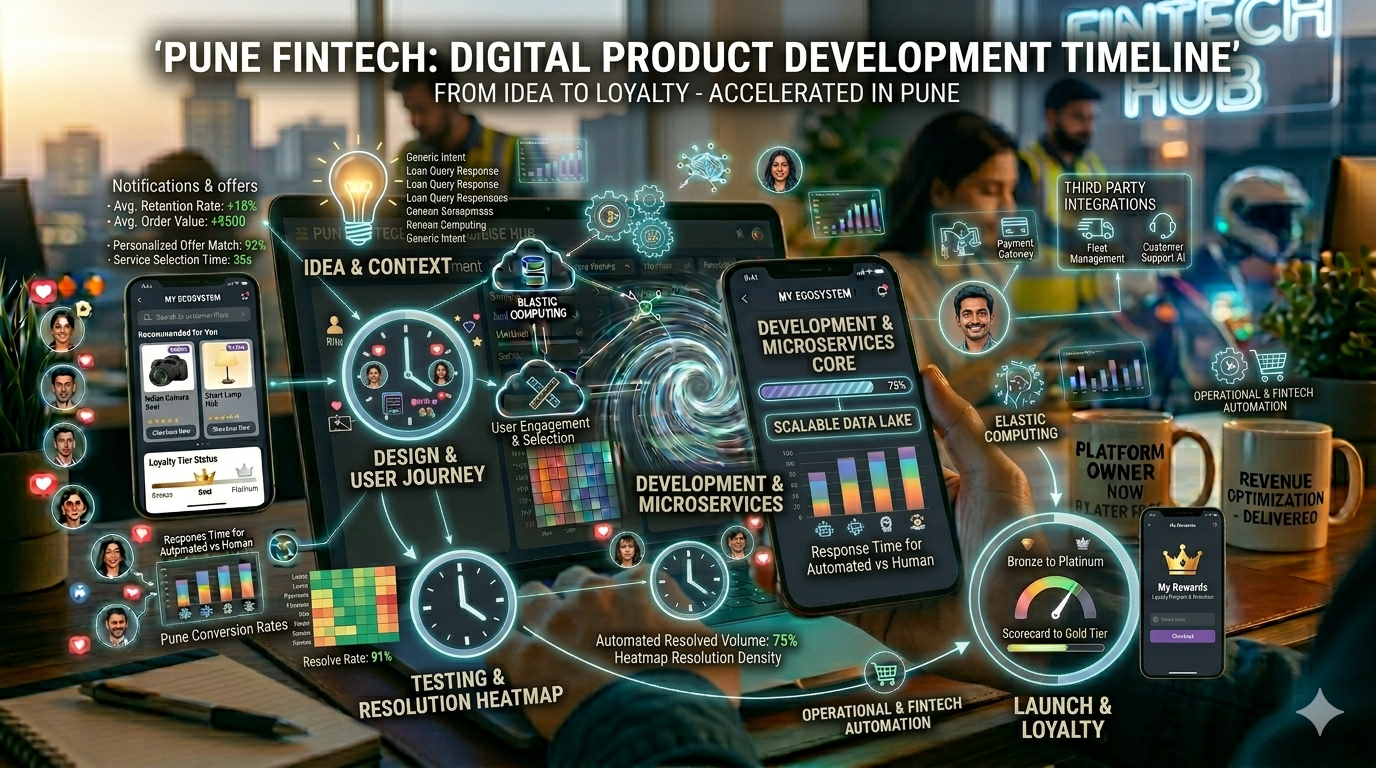
When planning a digital product—whether it’s a website, mobile app, or a full-scale SaaS platform—one of the most common questions is: “How long will it take?”
The answer depends on complexity, features, and the development approach. However, most software projects follow a structured timeline with clearly defined stages. Understanding these phases can help you set realistic expectations, allocate resources wisely, and avoid costly delays.
Let’s break down typical timelines across different types of digital products and explore the key stages involved.
Typical Timelines by Project Type
1. Basic Website (2–6 Weeks)
A simple business website with informational pages (Home, About, Services, Contact) usually has the shortest timeline.
Timeline Breakdown:
- Planning: 2–5 days
- Design: 1–2 weeks
- Development: 1–2 weeks
- Testing & Launch: 2–5 days
Best for: Small businesses, personal brands, service providers
2. Ecommerce Platform (6–12 Weeks)
Ecommerce websites require more functionality such as product listings, payment gateways, inventory management, and user accounts.
Timeline Breakdown:
- Planning: 1–2 weeks
- Design: 2–3 weeks
- Development: 3–5 weeks
- Testing & Launch: 1–2 weeks
Best for: Retail brands, D2C startups, online stores
3. Mobile Application (8–16 Weeks)
Mobile apps—whether for iOS, Android, or both—require careful UI/UX design and backend integration.
Timeline Breakdown:
- Planning: 1–2 weeks
- Design: 2–4 weeks
- Development: 4–8 weeks
- Testing & Deployment: 2–3 weeks
Best for: Startups building customer-facing apps, service platforms, or internal tools
4. Complex Web Platforms / SaaS Products (3–9 Months+)
Advanced platforms such as marketplaces, SaaS tools, or enterprise systems involve complex architecture, scalability considerations, and multiple integrations.
Timeline Breakdown:
- Planning & Research: 2–4 weeks
- Design & Prototyping: 3–6 weeks
- Development: 8–20+ weeks
- Testing & QA: 3–6 weeks
- Deployment & Iteration: Ongoing
Best for: Startups, enterprises, and tech-driven businesses
Key Stages in the Software Development Timeline
Regardless of the type of product, most projects follow these core stages:
1. Planning & Discovery
This is where ideas are validated and transformed into a clear roadmap.
Includes:
- Requirement gathering
- Market research
- Feature prioritization
- Technical feasibility
Outcome: A well-defined project scope and timeline
2. Design (UI/UX)
Design focuses on how the product looks and how users interact with it.
Includes:
- Wireframes and prototypes
- User journey mapping
- Visual design
Outcome: A user-friendly and visually appealing interface
3. Development
This is where the actual product is built.
Includes:
- Frontend development (UI)
- Backend development (server, database)
- API integrations
Outcome: A functional product with core features implemented
4. Testing & Quality Assurance
Testing ensures the product works smoothly and is free of critical bugs.
Includes:
- Functional testing
- Performance testing
- Security checks
Outcome: A stable and reliable product ready for launch
5. Deployment & Launch
The product is made live for users.
Includes:
- Server setup
- App store submission (for mobile apps)
- Final checks and monitoring
Outcome: A live product accessible to users
What Affects Development Timelines?
Several factors can influence how long your project takes:
- Feature complexity – More features = longer timeline
- Team size and expertise – Skilled teams move faster
- Technology stack – Some tools accelerate development
- Client feedback cycles – Delays in approvals can slow progress
- Third-party integrations – Payment gateways, APIs, etc.
Final Thoughts
There’s no one-size-fits-all timeline in software development. A simple website might take a few weeks, while a scalable SaaS platform can take months. The key is to approach development in structured phases, stay flexible, and focus on building a strong foundation first.
If you’re planning a digital product, understanding these timelines will help you make smarter decisions and avoid unnecessary delays.
Thinking of Launching a Platform Like This?
If you’re exploring an idea for a website, mobile app, or SaaS platform, having the right development partner can make all the difference. Turnkey Infotech works with startups and businesses to design and build digital products—from simple websites to complex platforms and marketplaces.
Building a successful product isn’t just about coding—it requires the right architecture, scalable technology, and a clear development strategy.
What Turnkey Infotech can help you build:
- Websites
- Ecommerce platforms
- Mobile apps
- SaaS platforms
- Marketplaces
- Custom software solutions
If you have an idea and want to understand how it can be brought to life, now is the perfect time to explore it.
Request a Free Demo or Book a Free Consultation to discuss your vision and take the first step toward building your platform.