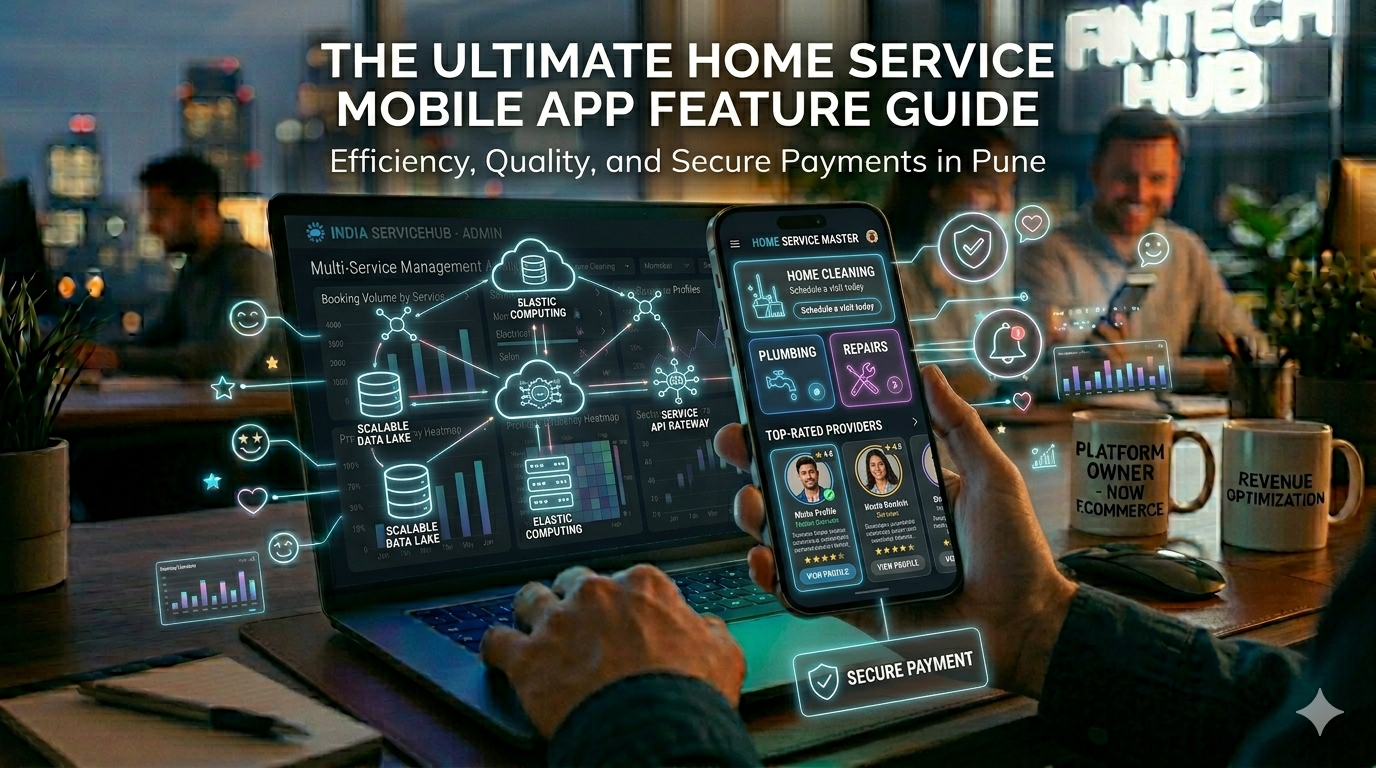
The on-demand economy has transformed how people access everyday services. From booking a plumber to scheduling a home cleaning session, users now expect fast, reliable, and seamless digital experiences. This demand has led to the rapid growth of home service apps like Urban Company, TaskRabbit, and others.
If you’re planning to build a home service platform, understanding the underlying architecture is crucial. A well-structured system ensures scalability, performance, and a smooth experience for both customers and service providers.
In this guide, we’ll break down the key components of a home service app and explain how each part works together.
1. Core Components of a Home Service App
A robust home service platform typically consists of four major components:
- Customer App (User Interface)
- Service Provider App
- Booking & Scheduling System
- Admin Dashboard
Each plays a distinct role in delivering a seamless marketplace experience.
2. Customer App: The User Experience Layer
The customer app is the front-facing interface where users discover and book services. It should be intuitive, fast, and designed for convenience.
Key Features:
- User Registration & Profiles
- Service Browsing & Search
- Real-Time Availability
- Booking & Scheduling
- Secure Payments
- Ratings & Reviews
- Push Notifications
Tech Considerations:
- Built using frameworks like Flutter or React Native for cross-platform compatibility
- Backend integration via REST APIs or GraphQL
- Real-time updates using WebSockets or Firebase
The goal is simple: reduce friction and make booking a service as easy as ordering food online.
3. Service Provider App: Empowering Professionals
This app is designed for technicians, cleaners, electricians, and other professionals who deliver the service.
Key Features:
- Profile Management
- Job Notifications & Alerts
- Schedule Management
- Navigation & Location Tracking
- Earnings Dashboard
- Service History
Tech Considerations:
- GPS integration for real-time tracking
- Calendar sync for availability
- Offline functionality for low-network areas
A well-designed provider app increases efficiency and ensures service quality.
4. Booking & Scheduling System: The Core Engine
This is the backbone of the platform. It connects customers with service providers and manages the entire booking lifecycle.
Core Functions:
- Service Matching Algorithm
- Time Slot Management
- Dynamic Pricing (optional)
- Booking Confirmation & Status Updates
- Cancellation & Rescheduling Logic
Architecture Insights:
- Microservices architecture is often preferred for scalability
- Queue systems (like RabbitMQ or Kafka) handle booking requests efficiently
- Database optimization for real-time availability
A strong booking engine ensures reliability—even during peak demand.
5. Admin Dashboard: Control & Insights
The admin panel is where business owners manage operations, monitor performance, and make strategic decisions.
Key Features:
- User & Provider Management
- Service Category Management
- Order Tracking
- Analytics & Reports
- Commission & Payment Management
- Dispute Resolution
Tech Considerations:
- Built as a web app using React, Angular, or Vue
- Role-based access control for security
- Integration with analytics tools
This layer gives you full visibility and control over your platform.
6. Recommended System Architecture
A scalable home service app typically follows a layered architecture:
1. Frontend Layer
- Customer App (Mobile/Web)
- Provider App (Mobile)
- Admin Panel (Web)
2. Backend Layer
- API Gateway
- Authentication Service
- Booking Service
- Payment Service
- Notification Service
3. Database Layer
- Relational DB (PostgreSQL/MySQL) for structured data
- NoSQL DB (MongoDB) for flexibility
- Caching (Redis) for performance
4. Infrastructure Layer
- Cloud hosting (AWS, Azure, GCP)
- CDN for faster content delivery
- Load balancers for traffic distribution
7. Key Integrations
To make your platform production-ready, you’ll need:
- Payment Gateways (Stripe, Razorpay)
- SMS/Email Notifications
- Maps & Location APIs
- Push Notifications
- Analytics Tools
8. Scalability & Security Considerations
Scalability:
- Use microservices to scale individual components
- Implement auto-scaling on cloud infrastructure
- Optimize database queries and caching
Security:
- End-to-end encryption
- Secure authentication (OAuth, JWT)
- Regular security audits
- PCI compliance for payments
9. Monetization Models
You can generate revenue through:
- Commission per booking
- Subscription plans for providers
- Featured listings
- Surge pricing
- Service bundles
10. Final Thoughts
Building a home service app is not just about creating an app—it’s about designing a complete ecosystem that connects users, service providers, and business operations seamlessly.
Success depends on:
- Clean UX/UI
- Strong backend architecture
- Reliable booking system
- Continuous optimization
Thinking of Launching a Platform Like This?
Building a home service marketplace involves more than just development—it requires the right architecture, scalable technology, and a clear product strategy. That’s where Turnkey Infotech can help.
We work with startups and businesses to design and develop digital products tailored to their vision—whether it’s a marketplace, SaaS platform, or mobile app.
We can help you build:
- Websites
- Ecommerce platforms
- Mobile apps
- SaaS platforms
- Marketplace platforms
- Custom software solutions
If you’re exploring an idea or planning to launch a platform like this, it’s worth discussing the right approach early on.
👉 Book a Free Consultation or Request a Free Demo to understand how your idea can be turned into a scalable digital product.