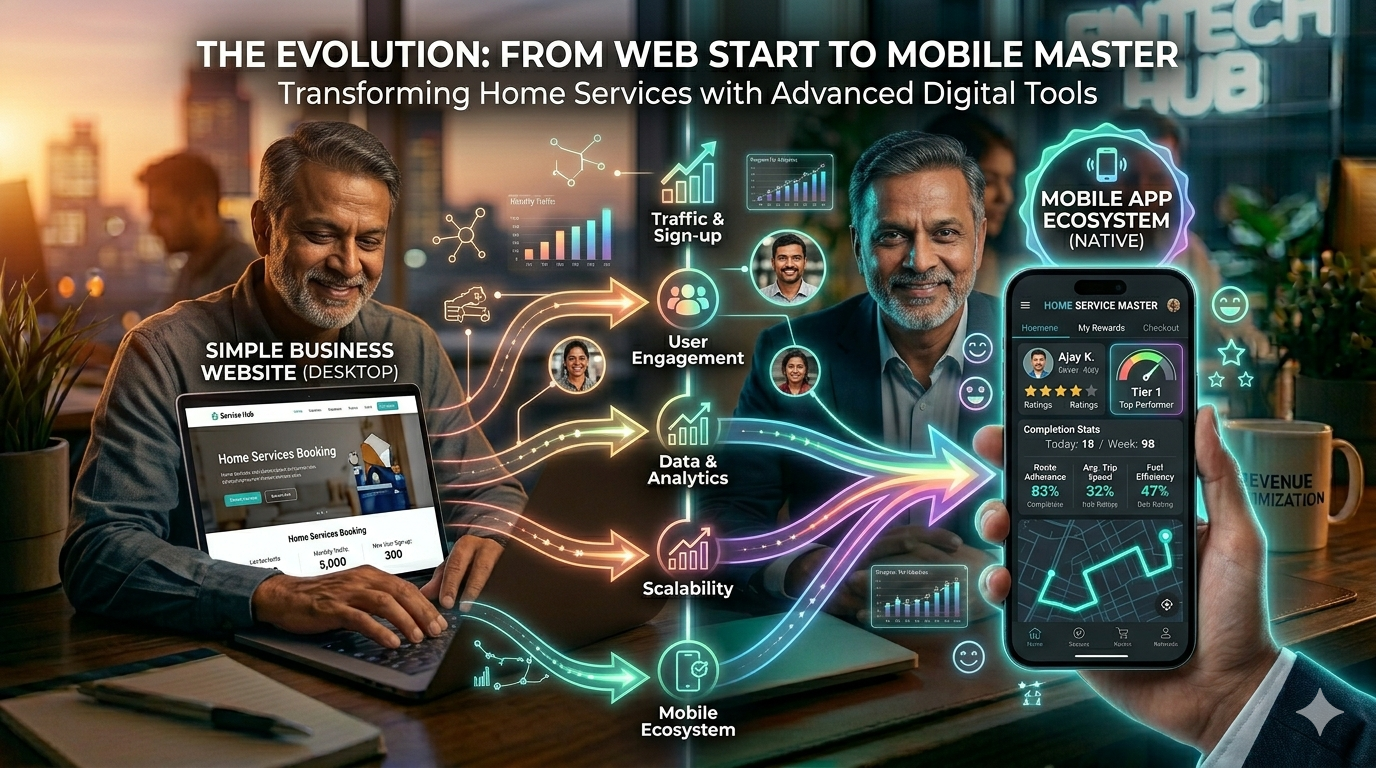
In today’s fast-evolving digital landscape, most businesses don’t jump straight into building a mobile app. Instead, they begin with a website—and for good reason. A website is often the first step toward establishing an online presence, validating an idea, and reaching early customers.
But as businesses grow, many reach a turning point where a mobile app after website becomes the next logical step. This transition isn’t just a trend—it’s a strategic evolution driven by customer behavior, scalability needs, and competitive advantage.
Let’s explore how and why this journey unfolds.
Stage 1: Starting with a Website
For most startups and businesses, a website is the foundation of their digital journey.
Why websites come first:
- Lower cost and faster launch
- Accessible across all devices
- Ideal for SEO and discovery
- Easy to update and iterate
At this stage, businesses focus on:
- Building brand presence
- Testing product-market fit
- Generating leads or early sales
For example, an online store may begin with a simple ecommerce website to validate demand before investing heavily in technology.
Stage 2: Growth and Validation
As traffic increases and customers start engaging regularly, businesses begin to see patterns:
- Repeat visitors
- Returning customers
- Increased mobile usage
- Demand for faster interactions
This is where limitations of a website start to appear.
Common challenges:
- Slower load times compared to apps
- Limited personalization
- Dependence on browsers
- Lower customer retention
At this stage, businesses often realize that relying only on a website may restrict long-term growth.
Stage 3: Recognizing the Need for a Mobile App
Once a business has consistent users and clear demand, investing in a mobile app after website becomes a strategic move.
Key signals it’s time to build an app:
- A large percentage of users come from mobile devices
- Customers interact frequently (daily or weekly)
- There is a need for push notifications
- User experience needs to be faster and more seamless
- The business wants stronger customer retention
For example:
- Ecommerce brands launch apps for easier browsing and repeat purchases
- Service platforms introduce apps for quick bookings
- Content platforms use apps to increase engagement
Stage 4: Benefits of Launching a Mobile App
Moving from a website to an app unlocks new growth opportunities.
1. Improved User Experience
Mobile apps offer faster navigation, smoother interactions, and a more intuitive interface compared to websites.
2. Higher Customer Retention
Features like push notifications, personalized content, and saved preferences keep users coming back.
3. Better Performance
Apps are optimized for mobile devices, resulting in quicker load times and fewer drop-offs.
4. Offline Access
Unlike websites, apps can provide limited functionality even without internet connectivity.
5. Stronger Brand Presence
An app icon on a user’s phone acts as a constant reminder of your brand.
Stage 5: Website + App = A Powerful Combination
It’s important to note that launching a mobile app doesn’t replace a website—it complements it.
The ideal digital ecosystem:
- Website → Discovery, SEO, information, onboarding
- Mobile App → Engagement, retention, repeat usage
Together, they create a seamless user journey:
- Users discover your business via search or ads
- They explore your offerings on your website
- They download your app for a better experience
- They become loyal, repeat customers
Stage 6: Scaling with Technology
As businesses grow further, they begin integrating:
- Backend systems and APIs
- CRM and analytics tools
- Payment gateways
- Automation and personalization engines
At this level, both website and app become part of a larger digital platform designed for scale.
Real-World Pattern You’ll Notice
Many successful businesses follow this exact path:
- Launch a website
- Validate demand
- Build a loyal user base
- Introduce a mobile app
- Scale into a full-fledged digital ecosystem
This step-by-step approach reduces risk and ensures that the app is built with real user insights—not assumptions.
Final Thoughts
The journey from website to mobile app is not just about technology—it’s about timing, strategy, and understanding your users.
Building a mobile app after website makes the most sense when your business has:
- Proven demand
- Consistent user engagement
- A need for deeper customer relationships
When done right, this transition can significantly boost growth, retention, and overall business value.
Thinking of Launching a Platform Like This?
If you’re considering building a website first and later scaling into a mobile app or full platform, having the right tech partner makes all the difference.
Turnkey Infotech helps startups and businesses design and develop digital products—from websites and ecommerce platforms to mobile apps, SaaS products, and marketplace solutions. Building scalable platforms requires the right architecture, thoughtful UX, and solid development expertise from day one.
Whether you’re at the idea stage or already growing, it’s worth exploring how your platform can evolve.
What can be built:
- Websites
- Ecommerce platforms
- Mobile apps
- SaaS platforms
- Marketplaces
- Custom software solutions
If you have an idea in mind, this could be the perfect time to take the next step.
👉 Request a Free Demo or Book a Free Consultation to discuss your concept and see how it can be brought to life.