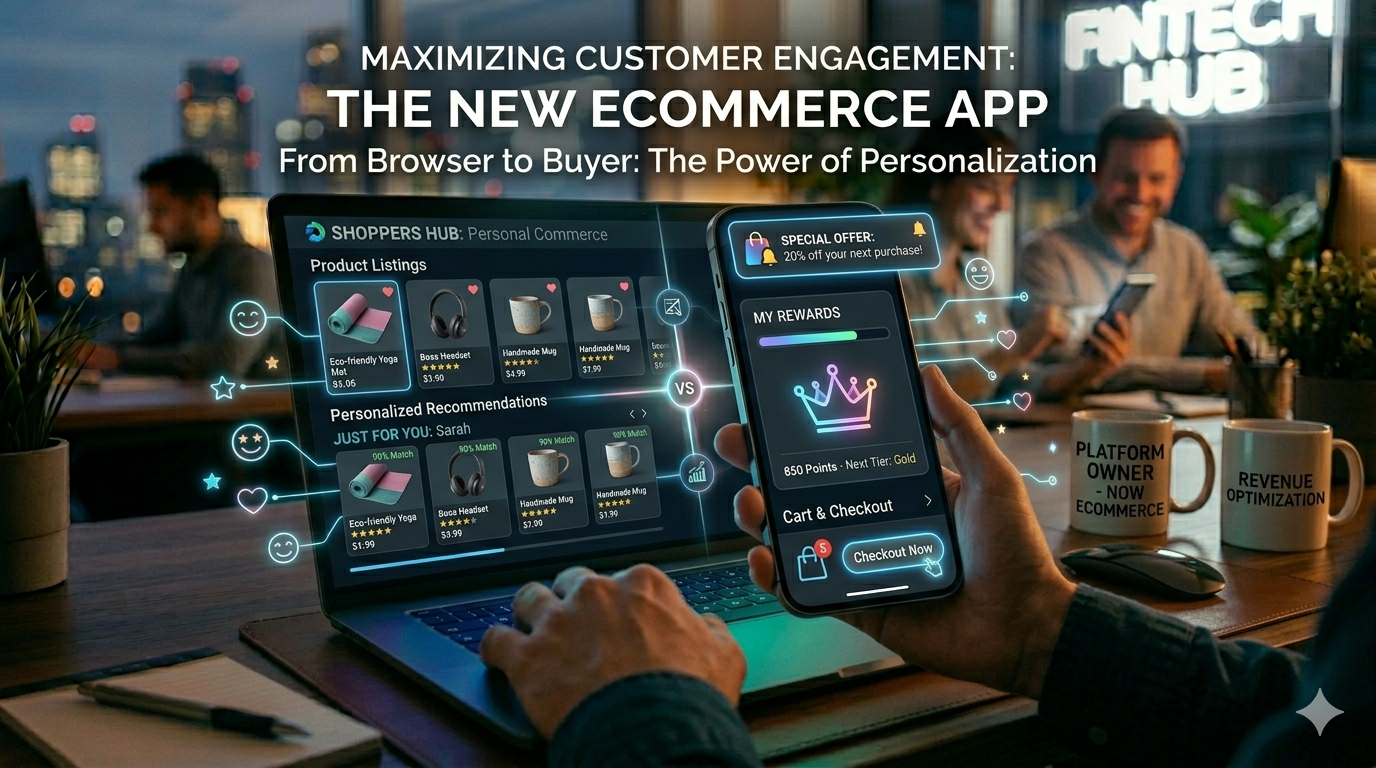
In today’s fast-paced digital economy, businesses are rapidly shifting from traditional websites to mobile-first experiences. Ecommerce mobile app development has become a powerful strategy for brands aiming to build deeper customer relationships, improve engagement, and ultimately drive higher retention rates.
With mobile commerce (m-commerce) dominating online shopping behavior, businesses that invest in robust, user-friendly apps gain a competitive edge—not just in acquiring customers, but in keeping them coming back.
Why Ecommerce Mobile Apps Matter for Retention
Customer retention is the backbone of sustainable growth. While acquiring new customers can cost up to 5x more than retaining existing ones, mobile apps provide businesses with tools to continuously engage users in a personalized and meaningful way.
Unlike websites, mobile apps offer:
- Direct communication channels
- Faster user experiences
- Personalized interactions
- Higher engagement through notifications
Let’s explore how specific features of ecommerce apps help improve retention.
1. Push Notifications: Real-Time Engagement That Drives Repeat Purchases
Push notifications are one of the most effective tools in ecommerce mobile apps. They allow businesses to directly reach users—even when they are not actively browsing.
How They Improve Retention:
- Remind users about abandoned carts
- Notify about discounts, flash sales, and restocks
- Share personalized offers based on user behavior
Example:
A fashion ecommerce brand sends a notification:
“Your favorite sneakers are back in stock—grab them before they’re gone!”
This timely nudge often converts intent into purchase, bringing users back into the app.
Best Practices:
- Personalize notifications based on user activity
- Avoid over-sending (which can lead to app uninstalls)
- Use rich notifications (images, emojis, urgency triggers)
2. Personalized Recommendations: Making Every User Feel Understood
Modern consumers expect tailored experiences. Ecommerce apps leverage AI and user data to offer personalized product recommendations.
How They Improve Retention:
- Increase relevance of products shown
- Enhance browsing experience
- Encourage repeat visits
Example:
Online retailers like Amazon recommend products based on:
- Past purchases
- Browsing history
- Wishlist items
For instance:
“Customers who bought this also liked…”
This not only boosts sales but keeps users engaged for longer periods.
Key Technologies Behind It:
- Machine learning algorithms
- Behavioral analytics
- Customer segmentation
3. Faster Checkout Experiences: Reducing Friction, Increasing Loyalty
A slow or complicated checkout process is one of the biggest reasons for cart abandonment. Ecommerce apps simplify this with streamlined checkout flows.
How They Improve Retention:
- Reduce drop-offs during purchase
- Provide seamless user experience
- Encourage repeat buying
Features That Help:
- One-tap checkout
- Saved payment methods
- Autofill shipping details
- Integration with digital wallets (UPI, Apple Pay, Google Pay)
Example:
Apps like Flipkart and Myntra allow users to complete purchases in seconds with saved addresses and payment options, making repeat purchases effortless.
4. Loyalty Programs & Rewards Integration
Mobile apps are ideal for integrating loyalty programs that incentivize repeat purchases.
How They Improve Retention:
- Encourage users to return for rewards
- Increase lifetime customer value
- Build brand affinity
Example:
- Points for every purchase
- Exclusive app-only discounts
- Early access to sales
Starbucks’ mobile app is a great example where customers earn points (stars) for each purchase, redeemable for rewards.
5. Seamless User Experience & Performance
Speed and usability are critical. Mobile apps outperform websites in terms of performance because they are optimized for specific devices.
Benefits:
- Faster loading times
- Smooth navigation
- Offline capabilities
Impact on Retention:
Users are more likely to return to an app that feels effortless to use compared to a slow, cluttered website.
6. In-App Messaging & Customer Support
Mobile apps enable real-time support through chatbots or live chat features.
How They Improve Retention:
- Resolve issues instantly
- Build trust and reliability
- Enhance overall customer experience
Example:
Many ecommerce apps provide in-app chat support where users can track orders, initiate returns, or get product assistance without leaving the app.
7. Data-Driven Insights for Continuous Improvement
Ecommerce apps provide valuable insights into user behavior, enabling businesses to continuously optimize their offerings.
Metrics That Matter:
- User session duration
- Conversion rates
- Retention rates
- Purchase frequency
With this data, businesses can:
- Refine marketing strategies
- Improve product recommendations
- Enhance user experience
Real-World Impact: Why Leading Brands Invest in Apps
Top ecommerce brands prioritize mobile apps because they:
- Drive higher engagement compared to websites
- Deliver better personalization
- Enable direct marketing channels
- Increase repeat purchase rates
Brands like Amazon, Flipkart, and Nykaa have successfully used mobile apps to create loyal customer bases by combining convenience with personalization.
Key Takeaways
Ecommerce mobile app development is no longer optional—it’s essential for businesses aiming to scale and retain customers.
By leveraging:
- Push notifications
- Personalized recommendations
- Fast checkout systems
- Loyalty programs
Businesses can create a powerful retention engine that keeps customers engaged and coming back.
Thinking of Launching a Platform Like This?
Building a high-performing ecommerce app or digital platform isn’t just about design—it requires the right technology architecture, scalability planning, and development expertise.
Turnkey Infotech works with startups, entrepreneurs, and growing businesses to design and build digital products that are reliable, scalable, and user-focused.
They can help you build:
- Websites
- Ecommerce platforms
- Mobile apps
- SaaS platforms
- Marketplace solutions
- Custom software
If you’re exploring an idea or planning to launch your own platform, it’s worth understanding what goes into building something like this—from features to tech stack to user experience.
Book a free consultation or request a demo to discuss your idea and see how your platform could take shape. It’s a great first step toward turning your concept into a real, working product.