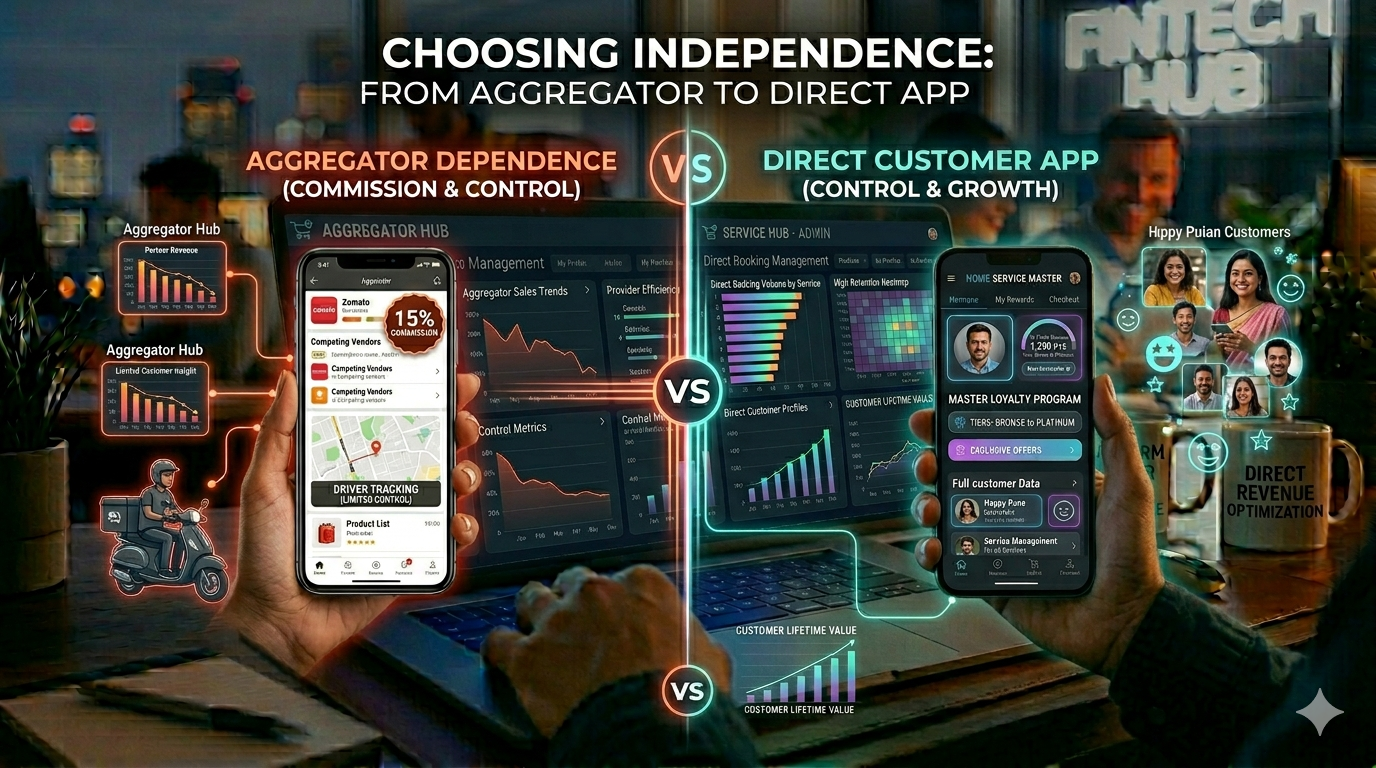
In today’s digital-first economy, businesses are rethinking how they connect with customers. While aggregators and marketplaces like food delivery apps, travel portals, and ecommerce platforms offer visibility and reach, they also come with limitations. Increasingly, companies are choosing to build their own direct customer mobile apps—and for good reason.
Let’s explore why.
The Limitations of Aggregators & Marketplaces
Aggregators are powerful, especially for early-stage growth. They provide access to a large audience without heavy upfront investment. But over time, businesses start to feel the constraints:
- High commissions eating into margins
- Limited control over branding and customer experience
- Restricted access to customer data
- Dependency on platform algorithms and policies
For many businesses, this creates a ceiling on growth.
Why Businesses Are Investing in Their Own Mobile Apps
1. Full Control Over Customer Experience
With a direct mobile app, businesses design every touchpoint—from onboarding to checkout.
Example:
A restaurant chain launching its own app can create a personalized ordering flow, offer loyalty rewards, and ensure a consistent brand experience—something not possible on aggregator platforms.
2. Ownership of Customer Data
Data is one of the most valuable assets today. Aggregators often keep customer insights to themselves.
With your own app, you can:
- Track user behavior
- Understand purchase patterns
- Personalize offers and communication
Example:
An online fashion brand can recommend products based on browsing history, increasing conversions significantly.
3. Higher Profit Margins
By eliminating third-party commissions, businesses retain more revenue per transaction.
Example:
A grocery delivery business that shifts repeat customers to its own app can save 15–30% in commissions, directly boosting profitability.
4. Stronger Customer Loyalty & Retention
Direct apps enable loyalty programs, push notifications, and exclusive offers.
Example:
A fitness studio app can send reminders, offer subscription plans, and reward consistent users—building long-term engagement.
5. Brand Building Without Interference
On marketplaces, your brand competes side-by-side with others—often reduced to pricing and ratings.
Your own app gives you:
- A dedicated brand space
- Custom UI/UX aligned with your identity
- Direct communication channels
Example:
A premium skincare brand can create a storytelling-driven app experience that reinforces brand value—something hard to achieve on generic marketplaces.
6. Independence & Long-Term Scalability
Relying solely on aggregators is risky. Policy changes, fee hikes, or algorithm shifts can impact your business overnight.
A direct app ensures:
- Business continuity
- Scalability on your own terms
- Flexibility to innovate
When Should You Consider Building Your Own App?
Not every business needs a mobile app from day one. But it makes sense when:
- You have repeat customers
- You want to build a brand, not just sell products
- You’re paying significant commission fees
- You want to own your customer relationships
Many successful businesses actually use a hybrid approach—leveraging aggregators for discovery while driving loyal customers to their own platform.
Final Thoughts
Aggregators are great launchpads—but they shouldn’t be your long-term home.
A direct customer mobile app is more than just a digital tool—it’s a strategic asset. It gives you control, insights, and the ability to build lasting relationships with your customers.
If you’re serious about scaling your business and building a strong brand, investing in your own platform is no longer optional—it’s essential.
Thinking of Launching a Platform Like This?
If you’re exploring the idea of building your own app or digital platform, having the right tech partner can make all the difference.
Turnkey Infotech helps startups and businesses design and develop scalable digital products—from idea to launch. Whether it’s a customer-facing app or a full-fledged platform, the foundation lies in choosing the right architecture and building it the right way.
Here’s what can be built:
- Websites
- Ecommerce platforms
- Mobile apps
- SaaS platforms
- Marketplace platforms
- Custom software solutions
If you have an idea—or even just a rough concept—it’s worth discussing how it could take shape.
Request a Free Demo or Book a Free Consultation to explore your idea and understand what it would take to build your own platform.