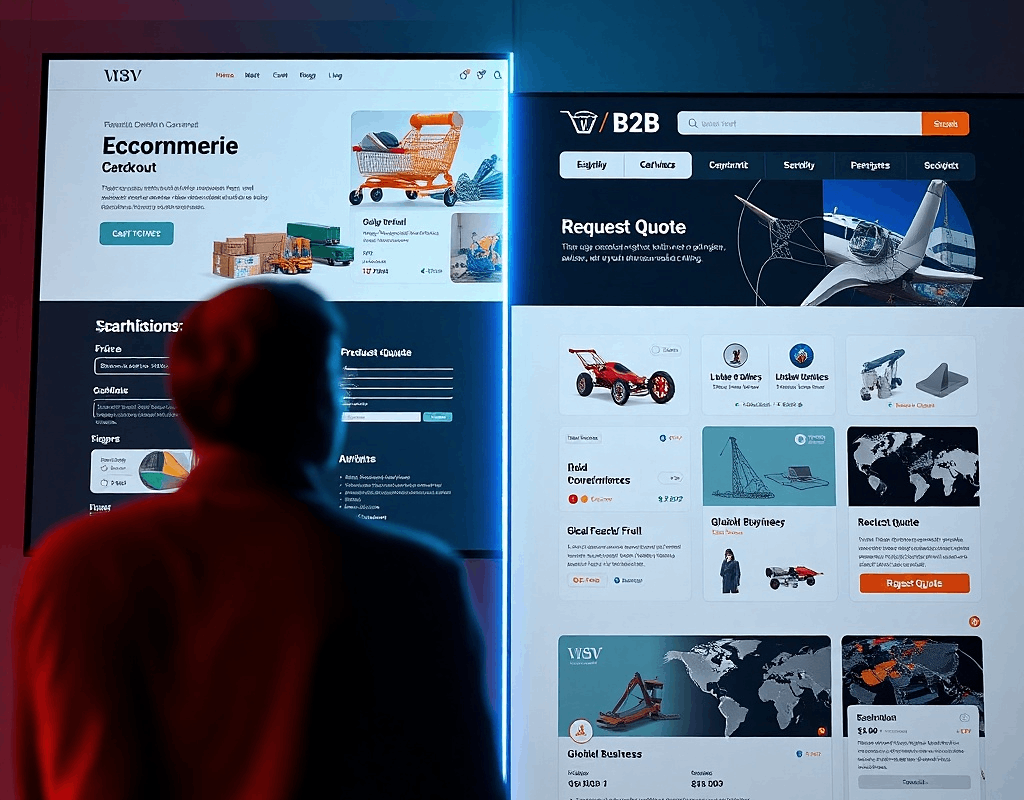
In the world of industrial manufacturing and exports, selling products online doesn’t always follow the typical ecommerce model. Unlike consumer goods businesses, industrial companies deal with complex products, bulk orders, customized specifications, and long sales cycles. That’s why many manufacturers, exporters, and wholesalers prefer building a B2B lead generation website rather than a traditional ecommerce platform.
Instead of focusing on instant online purchases, these websites are designed to attract, capture, and manage high-quality business enquiries. In this blog, we’ll explore why this model works better for industrial businesses, and how features like RFQ forms, product catalogs, and enquiry management systems play a critical role.
Understanding the B2B Buying Process
Before diving into the technology, it’s important to understand how B2B buyers behave.
Industrial purchases are rarely impulsive. Buyers typically:
- Compare multiple vendors
- Request technical specifications
- Negotiate pricing based on quantity
- Require customization
- Involve multiple decision-makers
Because of this, a simple “Add to Cart” and checkout system often doesn’t fit the process. Instead, businesses need a platform that facilitates discussion, negotiation, and relationship-building—which is exactly what a B2B lead generation website enables.
Why Ecommerce Doesn’t Always Work for Industrial Businesses
While ecommerce platforms are powerful for retail and standardized products, they come with limitations in the industrial space:
1. Complex Pricing Structures
Industrial products often have variable pricing based on:
- Order volume
- Custom specifications
- Material costs
- Shipping requirements
Displaying fixed prices online can be misleading or impractical.
2. Customization Requirements
Many products are not “off-the-shelf.” Buyers may request:
- Custom dimensions
- Special materials
- Branding or private labeling
Ecommerce systems struggle to handle these dynamic requirements efficiently.
3. Relationship-Driven Sales
Industrial sales rely heavily on trust and long-term relationships. Conversations, negotiations, and follow-ups are key—something ecommerce platforms don’t prioritize.
What Is a B2B Lead Generation Website?
A B2B lead generation website is designed to attract potential buyers and convert them into enquiries rather than direct customers.
Instead of focusing on transactions, the goal is to:
- Showcase products and capabilities
- Provide detailed technical information
- Capture buyer interest through enquiry forms
- Enable sales teams to follow up and close deals
It acts as a digital sales engine rather than just an online store.
Key Features of a B2B Lead Generation Website
1. RFQ (Request for Quotation) Forms
RFQ forms are the backbone of industrial websites.
They allow buyers to:
- Submit product requirements
- Specify quantity and customization needs
- Attach drawings or documents
- Request pricing quotes
For businesses, RFQs provide structured, high-intent leads. Unlike casual browsing, an RFQ indicates serious purchase intent.
Why RFQs Matter:
- Capture detailed buyer requirements upfront
- Reduce back-and-forth communication
- Improve lead quality
- Speed up the sales process
2. Detailed Product Catalogs
A strong product catalog is essential for attracting and educating buyers.
Unlike ecommerce listings, industrial catalogs focus on:
- Technical specifications
- Material details
- Use cases and applications
- Certifications and standards
- Downloadable brochures or datasheets
These catalogs help buyers evaluate products before initiating contact.
Benefits of Product Catalogs:
- Build credibility and professionalism
- Improve SEO visibility
- Reduce repetitive queries
- Enable informed decision-making
3. Enquiry Management System
Once leads start coming in, managing them efficiently becomes critical.
An enquiry management system helps businesses:
- Track incoming RFQs and enquiries
- Assign leads to sales teams
- Monitor follow-ups
- Maintain communication history
- Convert leads into customers
This transforms the website from a passive platform into an active sales pipeline tool.
Advantages of a B2B Lead Generation Website
1. Higher Quality Leads
Instead of random visitors, you attract serious buyers who are actively looking for suppliers.
2. Better Conversion Rates
Personalized communication and negotiation increase the chances of closing deals.
3. Flexibility in Pricing and Negotiation
You can tailor quotes based on specific requirements rather than being locked into fixed pricing.
4. Scalable Sales Process
With proper enquiry management, businesses can handle large volumes of leads efficiently.
5. Global Reach
Manufacturers and exporters can connect with international buyers without geographical limitations.
Real-World Use Cases
Manufacturers
Showcase machinery, components, or industrial products with detailed specs and generate RFQs from global buyers.
Exporters
Use catalogs and enquiry forms to connect with importers and distributors worldwide.
Wholesalers & Distributors
Capture bulk order enquiries and negotiate pricing based on volume.
SEO Benefits of Lead Generation Websites
A well-optimized B2B lead generation website can drive consistent organic traffic by targeting keywords like:
- Industrial product suppliers
- Bulk manufacturers
- Exporters of specific goods
With detailed product pages and technical content, these websites rank well on search engines and attract relevant business audiences.
When Should You Choose a B2B Lead Generation Website?
This model is ideal if:
- Your products require customization
- Pricing varies per order
- You deal in bulk or wholesale
- Your sales process involves negotiation
- You want to build long-term business relationships
If your business fits these criteria, a lead generation website is far more effective than a traditional ecommerce platform.
Combining Both Models (Hybrid Approach)
Some businesses adopt a hybrid strategy:
- Use ecommerce for standardized products
- Use RFQ-based lead generation for customized or bulk orders
This approach provides flexibility while maximizing revenue opportunities.
Conclusion
Industrial businesses operate in a fundamentally different environment than consumer-focused brands. Their sales processes are complex, relationship-driven, and highly customized. A B2B lead generation website aligns perfectly with these needs by focusing on enquiries rather than transactions.
With features like RFQ forms, detailed product catalogs, and enquiry management systems, these platforms empower businesses to attract serious buyers, streamline communication, and close high-value deals more effectively.
Thinking of Launching a Platform Like This?
If you’re exploring the idea of building a B2B lead generation website or any digital platform, it’s important to get the technology and architecture right from the start.
Turnkey Infotech works with startups and businesses to design and develop scalable digital products tailored to their goals. Whether you’re building a niche platform or modernizing your business online, having the right development partner can make all the difference.
They can help you build:
- Business websites
- Ecommerce platforms
- Mobile apps
- SaaS products
- Marketplace platforms
- Custom software solutions
If you have an idea in mind, this could be the perfect time to explore it further. You can request a free demo or book a free consultation to discuss your concept, validate your approach, and understand how your platform can be built.