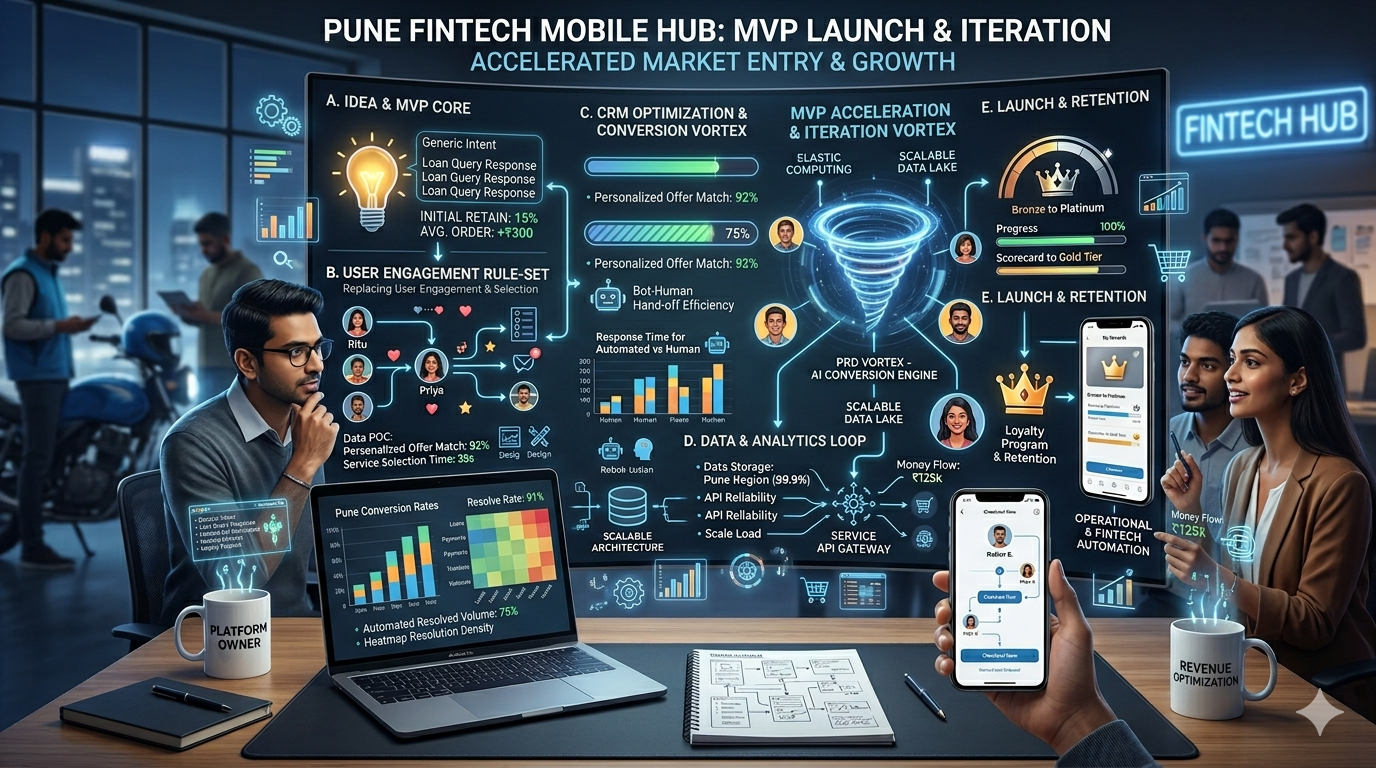
In the fast-paced startup ecosystem, building a full-featured product from day one is no longer the smartest approach. Instead, successful startups focus on MVP development for startups—a strategy that prioritizes speed, validation, and efficiency.
Whether you’re launching a tech platform, SaaS product, or mobile app, understanding how to build and leverage a Minimum Viable Product (MVP) can significantly improve your chances of success.
What is an MVP (Minimum Viable Product)?
A Minimum Viable Product (MVP) is the simplest version of a product that includes only the core features necessary to solve a specific problem for early users.
The goal of an MVP is not perfection—it’s validation.
Instead of investing months (or years) into building a fully-featured solution, startups release a basic version to:
- Test assumptions
- Gather user feedback
- Understand market demand
- Iterate quickly
An MVP helps answer the most important question:
👉 “Are we building something people actually want?”
Why MVP Development is Critical for Startups
1. Reduces Development Risk
Building a complete product without validating demand can lead to wasted time and resources. MVPs allow startups to test ideas early, reducing the risk of failure.
2. Saves Time and Cost
Instead of building 20 features, you build 3–5 essential ones. This significantly cuts down development time and cost.
3. Accelerates Time-to-Market
Speed matters in startups. MVPs help you launch faster and start learning from real users immediately.
4. Enables Data-Driven Decisions
Rather than relying on assumptions, MVPs provide real user data that helps refine the product roadmap.
5. Attracts Investors
A working MVP demonstrates traction, which makes it easier to secure funding from investors.
How MVP Development Works
Step 1: Identify the Core Problem
Start with a clear problem statement. What pain point are you solving?
Step 2: Define Your Target Users
Understand who your early adopters are and what they truly need.
Step 3: Prioritize Core Features
Focus only on features that directly solve the main problem. Avoid feature overload.
Step 4: Build the MVP
Develop a simple, functional version of your product using the right technology stack.
Step 5: Launch and Gather Feedback
Release your MVP to a small group of users and collect feedback.
Step 6: Iterate and Improve
Use insights to refine the product, add features, and improve usability.
Types of MVPs Startups Use
Startups adopt different MVP strategies depending on their goals:
- Landing Page MVP – Tests interest before building the product
- Prototype MVP – Visual demonstration of product functionality
- Single-Feature MVP – Focuses on solving one key problem
- Concierge MVP – Manual service before automation
- Wizard of Oz MVP – Appears automated but operates manually behind the scenes
Real-World Examples of MVP Success
1. Airbnb
Airbnb started with a simple website where the founders rented out air mattresses in their apartment. This basic MVP validated the idea of short-term rentals.
2. Dropbox
Before building the product, Dropbox created a demo video explaining how it would work. The video alone generated massive interest and validated demand.
3. Facebook
Initially launched as a simple social networking platform for Harvard students, Facebook focused on core functionality before expanding globally.
4. Uber
Uber began as a basic app connecting riders with drivers in a single city. It proved the concept before scaling to a global platform.
Common Mistakes in MVP Development
Avoid these pitfalls when building your MVP:
- Overbuilding features – Keep it minimal
- Ignoring user feedback – Feedback is your biggest asset
- Targeting too broad an audience – Focus on a niche first
- Skipping validation – Always test assumptions early
- Poor UX/UI design – Even MVPs should be user-friendly
Best Practices for MVP Development
- Start with a clear problem-solution fit
- Focus on user experience, even with limited features
- Use agile development methodologies
- Continuously measure and optimize
- Build with scalability in mind
MVP vs Full Product: Key Differences
| Aspect | MVP | Full Product |
| Features | Limited | Comprehensive |
| Development Time | Short | Long |
| Cost | Low | High |
| Purpose | Validate idea | Scale business |
| Risk | Low | High |
When Should You Move Beyond an MVP?
Once your MVP demonstrates:
- Strong user engagement
- Product-market fit
- Consistent feedback patterns
…it’s time to scale by adding features, improving performance, and expanding your audience.
Final Thoughts
MVP development for startups is not just a strategy—it’s a mindset. It encourages founders to stay lean, validate ideas quickly, and build products that truly resonate with users.
Instead of aiming for perfection, focus on learning fast and iterating smarter. That’s how successful startups are built.
Thinking of Launching a Platform Like This?
If you’re exploring an idea or planning to build a digital product, having the right technology partner can make all the difference. Turnkey Infotech helps startups and businesses design and develop scalable solutions—from concept to launch.
Building platforms like these requires thoughtful architecture, the right tech stack, and experienced development teams who understand startup challenges.
Here’s what Turnkey Infotech can help you build:
- Websites
- Ecommerce platforms
- Mobile apps
- SaaS platforms
- Marketplace platforms
- Custom software solutions
Whether you’re starting with an MVP or scaling an existing product, getting expert guidance early can save time, cost, and effort.
👉 Ready to turn your idea into a real product?
Book a Free Consultation or Request a Free Demo to explore how your platform can be built and scaled effectively.