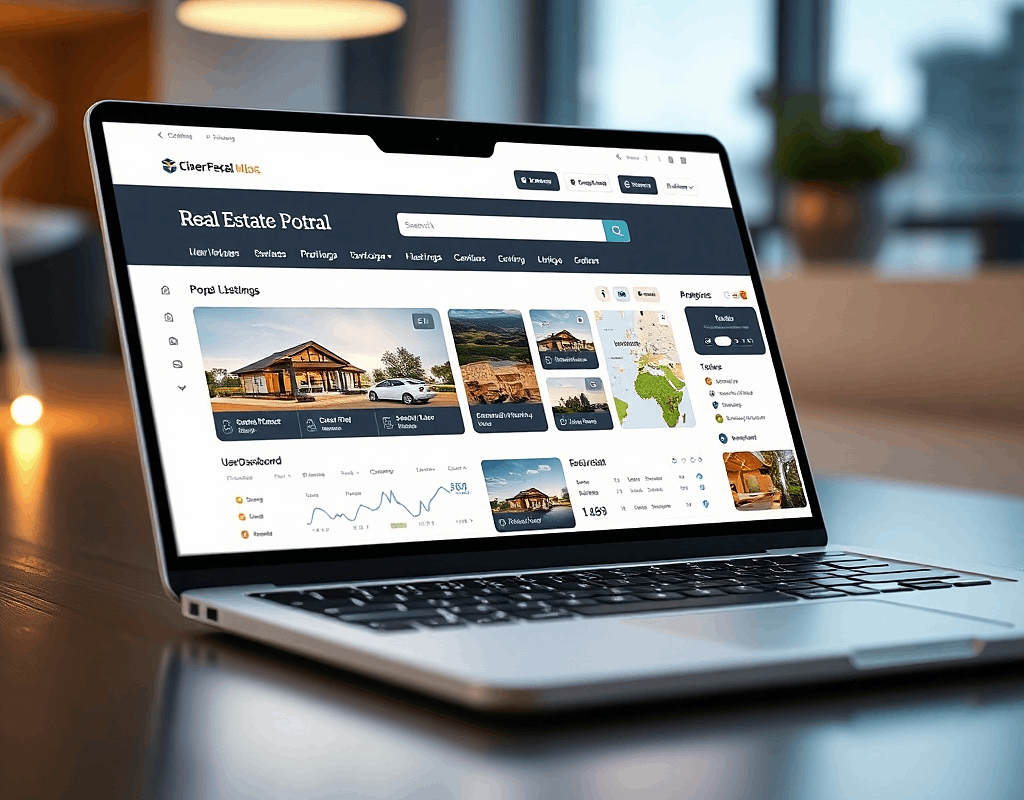
Real estate portals have transformed how buyers, sellers, and agents connect. From browsing listings to scheduling site visits, everything now happens digitally. But behind this seamless experience lies a robust technology stack designed to manage data, improve search accuracy, and capture valuable leads.
In this blog, we’ll break down the core real estate portal features and the technology that powers them—focusing on location search, listing management, lead capture systems, and user accounts.
1. Location-Based Search: The Core of Property Discovery
One of the most critical real estate portal features is location intelligence. Users don’t just search for properties—they search by neighborhoods, landmarks, and proximity.
How It Works:
- Geolocation APIs (like Google Maps integration) allow users to search by city, locality, or even pin-drop areas.
- Map-based search interfaces display properties visually with interactive markers.
- Filters such as price range, property type, BHK, and amenities refine results.
- Nearby insights show schools, hospitals, transit, and lifestyle facilities.
Technology Behind It:
- GIS (Geographic Information Systems)
- Map APIs
- Elastic search engines for fast filtering
- Location-based indexing in databases
This feature enhances user experience by making property discovery intuitive and hyper-local.
2. Listing Management System: The Backbone of the Portal
A property portal thrives on its listings. Managing thousands (or millions) of properties requires a structured and scalable system.
Key Capabilities:
- Property upload with images, videos, and documents
- Categorization (residential, commercial, rent, sale)
- Status tracking (available, sold, under construction)
- SEO-friendly listing pages
- Bulk upload for agents and developers
Technology Behind It:
- CMS (Content Management System) or custom admin panels
- Cloud storage for media files
- Database systems like MySQL or NoSQL for scalability
- Image optimization tools for faster loading
A well-built listing management system ensures accuracy, consistency, and performance.
3. Lead Capture Forms: Turning Visitors into Customers
Traffic alone doesn’t drive business—lead generation does. Real estate portals rely heavily on strategically placed forms to capture user interest.
Types of Lead Capture:
- Enquiry forms on property pages
- “Request a callback” buttons
- Schedule visit forms
- Download brochure forms
Smart Features:
- Auto-fill for logged-in users
- Lead routing to relevant agents
- CRM integration for follow-ups
- Email/SMS notifications
Technology Behind It:
- Backend form handling (Node.js, PHP, Python, etc.)
- CRM integrations (like Salesforce or custom systems)
- Marketing automation tools
- Data validation and spam protection
These systems ensure no potential customer slips through the cracks.
4. User Accounts: Personalization and Engagement
User accounts play a key role in improving engagement and retention.
Features for Users:
- Save favorite properties
- Create property alerts
- Track enquiries
- View recently visited listings
Features for Agents/Builders:
- Dashboard to manage listings
- Lead management panel
- Analytics on listing performance
- Subscription and plan management
Technology Behind It:
- Authentication systems (JWT, OAuth)
- Role-based access control
- Secure data storage and encryption
- Notification systems (email, push, SMS)
User accounts enable personalization, which significantly improves user experience and conversion rates.
5. Additional Real Estate Portal Features
Beyond the core systems, modern platforms include:
- Advanced search filters (budget, amenities, possession status)
- AI-based recommendations based on user behavior
- Virtual tours & video walkthroughs
- Chat systems for instant communication
- Payment gateway integration for premium listings
- Analytics dashboards for business insights
These features differentiate basic portals from high-performing platforms.
Final Thoughts
Building a successful property portal requires more than just a website—it demands a well-planned architecture that balances performance, usability, and scalability. From intelligent search to efficient lead management, every component must work seamlessly to deliver value to users and businesses alike.
Thinking of Launching a Platform Like This?
If you’re exploring the idea of building a real estate portal or any digital platform, having the right technology partner can make all the difference. Turnkey Infotech works closely with startups and businesses to design and develop scalable digital solutions tailored to their goals.
From defining the right architecture to building user-friendly interfaces and powerful backend systems, creating a platform like this requires thoughtful planning and strong development expertise.
Turnkey Infotech can help you build:
- Websites
- Ecommerce platforms
- Mobile apps
- SaaS platforms
- Marketplace platforms
- Custom software solutions
Whether you’re validating an idea or ready to launch, it’s worth having a conversation to explore what’s possible.
Book a Free Consultation or Request a Free Demo to discuss your idea and see how your platform can come to life.