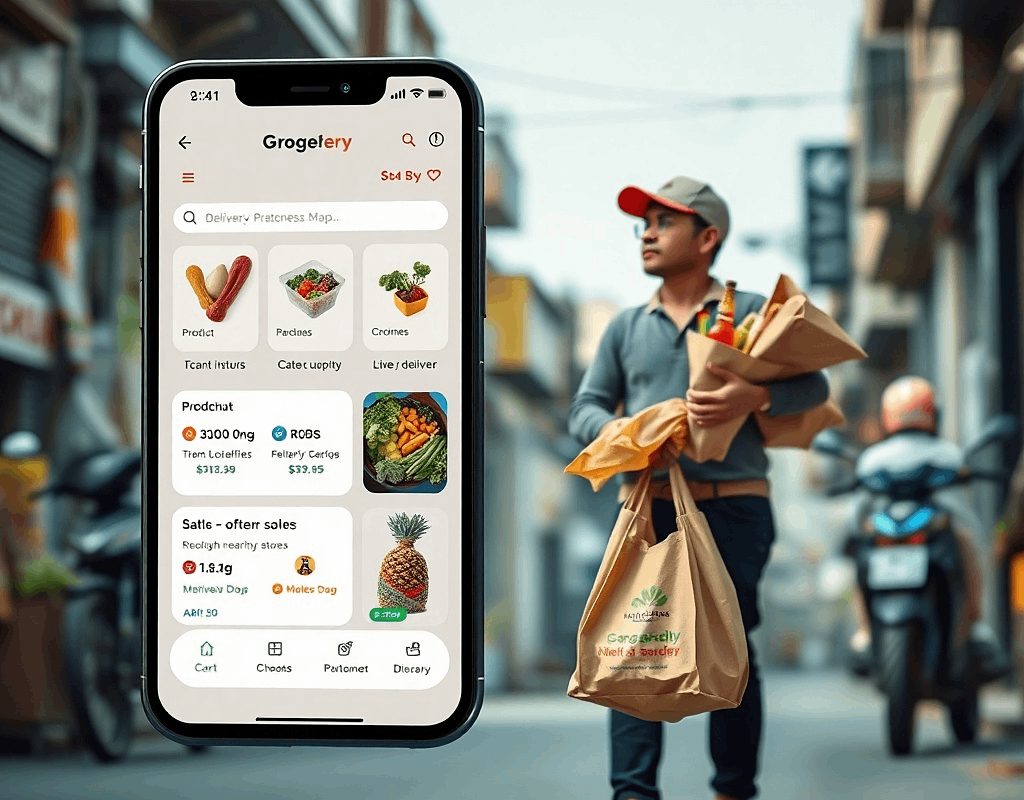
The demand for grocery delivery apps has surged as consumers prioritize convenience, speed, and real-time access to essentials. From same-day deliveries to 10-minute express services, hyperlocal grocery platforms have redefined how people shop.
If you’re exploring grocery delivery app development, understanding how these platforms function—from backend logistics to user experience—is crucial.
What Is a Hyperlocal Grocery Delivery Platform?
A hyperlocal grocery delivery app connects users with nearby stores or warehouses to deliver products quickly within a limited geographic area. Unlike traditional eCommerce models, these platforms rely heavily on proximity, real-time inventory, and efficient logistics.
Popular examples include:
- Instacart – Aggregates local stores and delivers via personal shoppers
- BigBasket – Combines warehouse and local store models
- Blinkit – Focuses on ultra-fast delivery via dark stores
How Grocery Delivery Apps Work
At a high level, these platforms involve three key stakeholders:
- Customers (end users)
- Store partners / warehouses
- Delivery personnel
The workflow typically follows this sequence:
- User browses products and places an order
- System processes and routes the order
- Store prepares the items
- Delivery partner is assigned
- Order is tracked and delivered
Let’s break down the core components that power this system.
1. Product Catalog Management
A robust product catalog is the backbone of any grocery delivery app.
Key Features:
- Real-time inventory updates
- Category-based browsing (fruits, dairy, snacks, etc.)
- Search and filtering options
- Dynamic pricing and discounts
Why It Matters:
Customers expect accuracy. Showing out-of-stock items or incorrect prices leads to poor user experience and lost trust.
Real-World Example:
Platforms like BigBasket maintain extensive catalogs synced with warehouse inventory to ensure availability and variety.
2. Smart Order Routing
Once an order is placed, it needs to be routed efficiently.
How It Works:
- The system identifies the nearest store or warehouse
- Checks inventory availability
- Assigns the order to the optimal fulfillment center
Why It Matters:
Efficient routing reduces delivery time and operational costs.
Advanced Capabilities:
- Multi-store order splitting
- AI-based route optimization
- Load balancing across stores
Example:
Instacart routes orders to nearby stores and assigns personal shoppers based on availability and proximity.
3. Delivery Assignment System
Delivery logistics are at the heart of hyperlocal apps.
Key Features:
- Automatic rider assignment
- Real-time availability tracking
- Delivery batching (multiple orders per trip)
- Route optimization
Why It Matters:
Fast and reliable delivery is the main value proposition. Poor logistics can break the entire experience.
Example:
Blinkit uses dark stores and strategically placed riders to deliver orders within minutes.
4. Real-Time Order Tracking
Transparency is a must-have in modern delivery apps.
Key Features:
- Live GPS tracking
- Order status updates (placed, packed, out for delivery)
- Estimated delivery time (ETA)
- Push notifications
Why It Matters:
Tracking builds trust and reduces customer anxiety.
User Experience Example:
Apps like Instacart allow users to track shoppers in real-time, including item replacements and updates.
5. Payments & Checkout System
A seamless checkout experience improves conversions.
Supported Options:
- Credit/debit cards
- UPI and digital wallets
- Cash on delivery
- Subscription plans
Why It Matters:
Frictionless payments reduce cart abandonment and enhance user satisfaction.
6. Ratings & Feedback System
Customer feedback drives platform quality.
Features:
- Store ratings
- Delivery partner reviews
- Product feedback
Why It Matters:
Helps maintain service quality and builds credibility.
7. Admin Dashboard & Analytics
Behind every successful app is a powerful admin panel.
Key Functionalities:
- Order management
- Inventory control
- Delivery tracking
- Customer insights
- Revenue analytics
Why It Matters:
Data-driven decisions help optimize operations and scale efficiently.
8. Scalability & Technology Stack
To compete in the market, your platform must scale seamlessly.
Key Considerations:
- Cloud infrastructure (AWS, Azure, etc.)
- Microservices architecture
- Real-time database management
- API integrations (maps, payments, notifications)
Why It Matters:
Handling high traffic, real-time updates, and large inventories requires a strong backend architecture.
Key Benefits of Grocery Delivery App Development
- Increased customer convenience
- Higher order frequency and retention
- Efficient inventory utilization
- New revenue streams for local businesses
- Competitive advantage in the digital marketplace
Challenges to Consider
- Inventory synchronization across multiple stores
- Delivery logistics in high-demand areas
- Maintaining delivery speed and accuracy
- Managing returns and replacements
Understanding these challenges early helps in building a resilient platform.
Future Trends in Grocery Delivery Apps
- AI-based demand forecasting
- Voice-enabled shopping
- Drone and autonomous delivery
- Subscription-based grocery models
- Dark store expansion
The industry continues to evolve rapidly, offering new opportunities for innovation.
Thinking of Launching a Platform Like This?
Building a grocery delivery platform isn’t just about an app—it requires the right technology architecture, seamless integrations, and a deep understanding of user behavior.
Turnkey Infotech helps startups and businesses design and develop scalable digital products, including:
- Websites
- Ecommerce platforms
- Mobile apps
- SaaS platforms
- Marketplace solutions
- Custom software
Whether you’re inspired by platforms like Instacart or Blinkit, turning your idea into a working product requires the right development partner.
If you’re exploring your idea or planning your next big move, you can book a free consultation to understand how your platform could be built—from concept to launch.
👉 Request a Free Demo or Book a Free Consultation to get started.