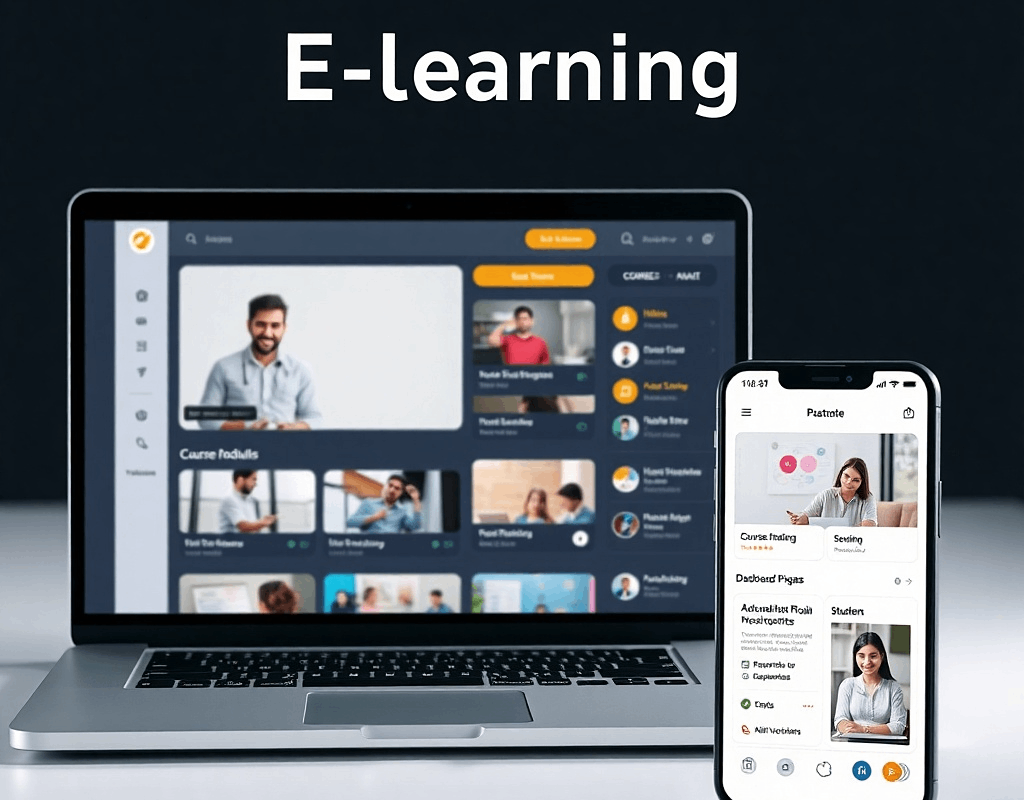
In recent years, e-learning has transformed how people acquire knowledge, build skills, and advance their careers. From individual instructors to large enterprises, organizations are investing heavily in online learning platform development to deliver scalable and engaging education experiences.
But what actually goes on behind the scenes of these platforms? Let’s break down the core components that power modern e-learning systems.
1. Course Hosting: The Foundation of Any E-Learning Platform
At the heart of every e-learning platform is its course hosting system. This is where all educational content lives and is delivered to learners.
Key Elements:
- Content Management System (CMS): Allows instructors or admins to upload and organize content such as videos, PDFs, presentations, and assignments.
- Video Hosting & Streaming: Most platforms use cloud-based video hosting to ensure smooth playback and scalability.
- Content Structuring: Courses are typically divided into modules, lessons, and chapters for easy navigation.
Advanced platforms also support:
- Drip content (scheduled release of lessons)
- Multi-format learning (video, audio, text, interactive content)
- Localization for global audiences
2. Student Dashboards: Personalized Learning Experience
The student dashboard is the user’s control center. It’s where learners interact with the platform daily.
Features of a Good Dashboard:
- Course Progress Tracking: Visual indicators showing completed and pending lessons
- Resume Learning: Continue from where the user left off
- Notifications: Updates about new content, deadlines, or announcements
- Performance Insights: Scores, completion rates, and feedback
A well-designed dashboard enhances user engagement and keeps learners motivated by giving them a clear sense of progress.
3. Quizzes and Assessments: Measuring Learning Outcomes
Assessments are essential for evaluating learner understanding and reinforcing knowledge.
Types of Quizzes:
- Multiple-choice questions (MCQs)
- True/false questions
- Fill-in-the-blanks
- Descriptive or assignment-based submissions
Core Functionalities:
- Automated Grading: Instant feedback for objective questions
- Manual Evaluation: For subjective answers or projects
- Certification: Issuing certificates upon course completion
- Analytics: Insights into learner performance and question difficulty
Some advanced platforms also use adaptive learning techniques, where quiz difficulty adjusts based on user performance.
4. Payment Systems: Monetizing the Platform
A robust payment system is crucial for platforms offering paid courses or subscriptions.
Common Monetization Models:
- One-time course purchase
- Subscription-based access
- Freemium (free + paid premium content)
- Bundled course packages
Payment Integration Features:
- Secure payment gateways (credit/debit cards, wallets, UPI)
- Multi-currency support for global users
- Coupon codes and discounts
- Invoice generation and transaction tracking
Security and compliance (like PCI-DSS standards) are critical to protect user data and build trust.
5. Backend Infrastructure: The Engine Behind the Scenes
While users see a clean interface, the backend handles all the heavy lifting.
Key Components:
- Database Management: Stores user data, course content, and transactions
- User Authentication: Secure login, role-based access (student, instructor, admin)
- APIs: Enable communication between frontend, backend, and third-party services
- Cloud Hosting: Ensures scalability and uptime
Technologies like microservices architecture and cloud platforms (AWS, Azure, GCP) are commonly used in online learning platform development to handle growing user bases efficiently.
6. Admin Panel: Platform Control and Management
Admins need a centralized system to manage everything.
Admin Capabilities:
- Manage users and instructors
- Approve or publish courses
- Track revenue and analytics
- Handle support queries
- Monitor platform performance
This layer ensures smooth operation and helps businesses scale efficiently.
7. Engagement Features: Keeping Learners Hooked
Modern e-learning platforms go beyond just content delivery.
Engagement Tools:
- Discussion forums and community spaces
- Live classes and webinars
- Gamification (badges, points, leaderboards)
- Push notifications and email reminders
These features improve retention and create a more interactive learning environment.
Why Online Learning Platform Development Requires Expertise
Building an e-learning platform is not just about putting videos online. It involves:
- Designing scalable architecture
- Ensuring seamless user experience
- Integrating secure payment systems
- Managing large volumes of content and users
- Maintaining performance under high traffic
Without the right technical strategy, platforms can quickly become slow, insecure, or difficult to scale.
Thinking of Launching a Platform Like This?
If you’re an entrepreneur, startup founder, or business owner exploring online learning platform development, you’re not alone—and you don’t have to figure it out from scratch.
Turnkey Infotech works with startups and growing businesses to design and build digital products tailored to their vision. Whether you’re starting with an idea or refining an existing concept, having the right technology architecture and development approach makes all the difference.
They can help you build:
- Websites
- Ecommerce platforms
- Mobile apps
- SaaS platforms
- Marketplace platforms
- Custom software solutions
If you’re curious about how your idea could turn into a scalable platform, this is a great time to explore it further. You can request a free demo or book a free consultation to discuss your concept, understand the development roadmap, and see what’s possible.