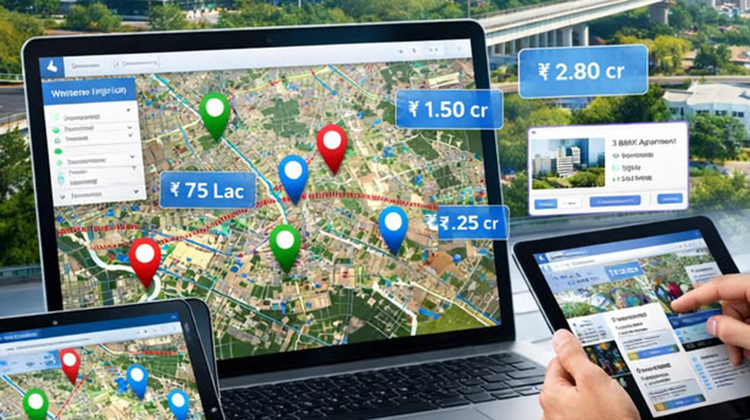
How Google Maps Integration Improves Property Discovery in Modern Real Estate Apps
The way people search for properties has changed dramatically over the past decade. Buyers and renters no longer rely only on static property listings or long search forms. Instead, they expect an interactive, location-first experience where they can visually explore neighborhoods, compare areas, and instantly see available properties nearby.
Integrating Google Maps into a real estate website or mobile app significantly improves the property discovery process. Map-based browsing helps users understand the geographic context of listings and quickly identify homes that match their preferred locations.
Modern property platforms use features such as geolocation search, radius filters, and location-based browsing to create a seamless discovery experience.
Why Location Is the Most Important Factor in Property Search
In real estate, location often matters more than almost any other factor. Buyers typically begin their search with questions like:
- What properties are available in this neighborhood?
- Are there homes near my workplace?
- Which properties are close to schools, metro stations, or parks?
A traditional list-based search can answer these questions only partially. But when property listings are displayed on a map, users can instantly see where properties are located relative to the places they care about.
Google Maps integration allows platforms to turn property discovery into a visual exploration experience rather than a simple database search.
Geolocation Search: Finding Properties Near You
One of the most powerful features of map-based property platforms is geolocation search.
When a user opens a real estate app or website, the system can detect their approximate location (with permission) and display nearby properties automatically.
How this improves user experience
- Instantly shows listings in the user’s current area
- Eliminates the need to manually enter location details
- Makes the search process faster and more intuitive
- Helps users discover properties they may not have considered
For example, a user browsing on their phone while visiting a neighborhood can quickly see homes or apartments available within walking distance.
This kind of instant discovery significantly increases user engagement on property platforms.
Radius Filters: Searching Within a Specific Distance
Another valuable feature enabled by Google Maps integration is the radius-based search filter.
Instead of limiting searches to administrative boundaries like cities or neighborhoods, users can define a custom search radius.
Examples of radius-based searches
Users might search for:
- Properties within 3 km of their office
- Apartments within 1 km of a metro station
- Houses within 5 km of a school district
- Rental units close to a university campus
With a radius filter, the platform draws a circular search area on the map and displays all listings within that zone.
This approach gives users much greater control over location preferences, especially in large metropolitan areas where neighborhood boundaries can be unclear.
Location-Based Browsing: Exploring Properties on the Map
Location-based browsing allows users to explore properties simply by moving around the map.
As users zoom in, zoom out, or drag the map to another area, the platform dynamically updates the property listings visible on the screen.
Key advantages of map-based browsing
- Users can visually explore different neighborhoods
- Property clusters show areas with many listings
- Interactive markers reveal property details
- Users can compare prices between nearby locations
This browsing style is particularly popular in modern real estate apps because it mimics how people naturally explore cities.
Instead of typing filters repeatedly, users simply navigate the map like they would in Google Maps.
Additional Benefits of Google Maps Integration
Beyond basic discovery features, Google Maps integration unlocks several powerful capabilities for real estate platforms.
1. Nearby Amenities and Points of Interest
Users can view nearby locations such as:
- Schools
- Hospitals
- Restaurants
- Parks
- Public transport stations
This context helps buyers evaluate whether a property fits their lifestyle.
2. Neighborhood Insights
Platforms can show:
- Walkability scores
- Traffic information
- Commute times
- Local landmarks
These insights help users make more informed decisions.
3. Improved Mobile Experience
Map-based property search works particularly well on mobile devices.
Users can easily:
- Pinch to zoom
- Tap property markers
- Navigate nearby listings
This makes the entire property discovery process faster and more interactive.
Why Modern Real Estate Platforms Rely on Map-Based Search
Many successful property platforms rely heavily on map-driven experiences because they align with how users actually search for homes.
Map integration helps platforms:
- Improve user engagement
- Reduce search friction
- Increase time spent on the platform
- Make property discovery more intuitive
For real estate businesses building digital platforms, Google Maps integration has become a core feature rather than an optional enhancement.
Thinking of Launching a Platform Like This?
If you’re planning to launch a real estate platform, property marketplace, or location-driven digital product, building features like map-based search, geolocation filters, and interactive browsing requires the right technology architecture and development expertise.
Turnkey Infotech helps startups, entrepreneurs, and businesses design and develop scalable digital platforms tailored to their ideas and market needs.
Our team builds a wide range of digital solutions, including:
- Websites
- Ecommerce platforms
- Mobile apps
- SaaS platforms
- Marketplace platforms
- Custom software solutions
Whether you’re building a real estate marketplace, a booking platform, or a location-based discovery app, the right product strategy and development approach can make a huge difference.
If you have an idea and want to explore how it could be built, we’d love to help.Request a Free Demo or Book a Free Consultation to discuss your concept and see how a platform like this could be developed.