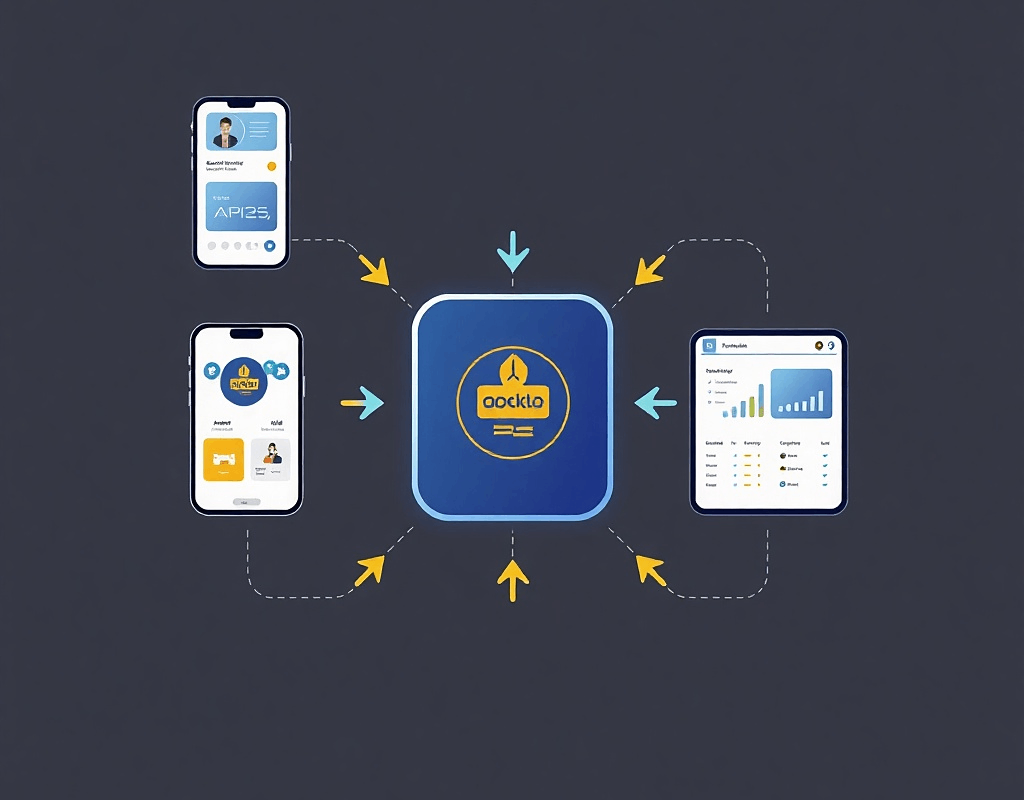
How food delivery and logistics apps actually work under the hood
From ordering dinner to scheduling a package pickup, modern delivery platforms feel incredibly simple to use. A few taps, a payment, and your order is on the way.
Behind that seamless experience, however, lies a sophisticated multi-app system architecture designed to coordinate thousands of users, drivers, orders, and payments in real time.
Platforms used by food delivery and logistics companies typically rely on multiple interconnected applications, each serving a specific user group while sharing the same backend infrastructure.
Let’s explore how this architecture works.
Why Delivery Platforms Use Multiple Apps
Delivery ecosystems involve three major participants:
- Customers placing orders
- Merchants or vendors fulfilling orders
- Delivery partners completing the delivery
Each group requires different tools and interfaces, which is why platforms usually build separate apps instead of forcing everything into a single application.
A typical delivery platform consists of:
- Customer App
- Delivery Partner App
- Merchant or Vendor App
- Admin Dashboard
- Backend Services and APIs
Together, these components form a multi-app platform architecture.
1. Customer App (Ordering Interface)
The customer application is what most users interact with.
It allows users to:
- Browse products or menus
- Place orders
- Make digital payments
- Track deliveries in real time
- Receive notifications and updates
- Rate and review the service
Key technologies typically involved:
- Mobile apps (iOS / Android)
- Payment gateway integrations
- Location services and GPS tracking
- Push notifications
- User authentication
The customer app communicates with the backend API, which handles order processing, payments, and data storage.
2. Merchant / Vendor App
Restaurants, stores, or warehouses use a merchant app or dashboard to manage incoming orders.
Typical features include:
- Order acceptance or rejection
- Menu or inventory management
- Order preparation status updates
- Analytics and reports
- Business settings and availability
For example, when a customer places an order, the merchant app receives a real-time notification so staff can begin preparing the order immediately.
3. Delivery Partner App
Delivery drivers or riders use a dedicated driver app to manage deliveries.
Key capabilities include:
- Accepting delivery requests
- Viewing pickup and drop locations
- GPS navigation
- Route optimization
- Delivery confirmation
- Earnings tracking
This app is deeply integrated with mapping APIs and real-time location tracking so the platform can show customers exactly where their delivery is.
4. Admin Dashboard (Platform Control Center)
The admin panel is the central control hub for platform operators.
It allows the business to manage everything across the ecosystem:
- User management
- Order monitoring
- Merchant onboarding
- Delivery partner management
- Payment reconciliation
- Analytics and reporting
- Customer support tools
Without a strong admin system, managing a large delivery platform becomes impossible.
5. Backend Infrastructure and APIs
At the core of the platform sits the backend system, which connects all apps together.
The backend typically includes:
API Layer
APIs allow the different apps to communicate with the platform’s services.
For example:
- Customer app → Place order
- Merchant app → Accept order
- Driver app → Start delivery
All of these interactions happen through API requests.
Order Management System
The order engine tracks every stage of the order lifecycle:
- Order placed
- Merchant confirmation
- Driver assignment
- Pickup
- Delivery
- Completion
This system coordinates the entire workflow.
Real-Time Communication Services
Delivery platforms rely heavily on real-time technologies such as:
- WebSockets
- Push notifications
- Event queues
- Real-time location tracking
These systems enable features like:
- Live driver tracking
- Instant order updates
- Delivery alerts
Databases and Data Storage
Platforms store large amounts of data including:
- User accounts
- Order history
- Payment records
- Delivery routes
- Merchant inventory
Most platforms use a combination of:
- Relational databases
- NoSQL databases
- Caching systems
This allows them to handle high transaction volumes efficiently.
6. Payment and Financial Systems
Delivery platforms must handle multiple financial flows:
- Customer payments
- Merchant payouts
- Driver earnings
- Platform commissions
To manage this, platforms integrate:
- Payment gateways
- Wallet systems
- Settlement engines
- Fraud detection systems
Financial systems must be secure, scalable, and compliant with regulations.
7. Scalability and Cloud Infrastructure
Large delivery platforms are built for high scalability.
During peak hours, thousands of orders may occur simultaneously.
To handle this demand, platforms rely on:
- Cloud infrastructure
- Microservices architecture
- Containerization
- Load balancing
- Auto-scaling servers
This ensures the platform remains fast and stable even during heavy usage.
Final Thoughts
What appears to be a simple food order or package delivery actually involves a complex ecosystem of interconnected applications and backend services.
By separating the platform into customer apps, driver apps, merchant apps, and a centralized backend, delivery platforms can create systems that are scalable, efficient, and easy for each participant to use.
This multi-app architecture is the foundation behind many successful modern platforms in food delivery, logistics, transportation, and on-demand services.
Thinking of Launching a Platform Like This?
Many entrepreneurs and businesses are exploring opportunities to build digital platforms similar to delivery or marketplace systems. But creating a scalable platform like this requires the right technology architecture, product strategy, and development expertise from the beginning.
At Turnkey Infotech, we help startups and businesses design and build digital products that power modern platforms and services.
Our team develops solutions such as:
- Websites
- Ecommerce platforms
- Mobile apps
- SaaS products
- Marketplace platforms
- Custom software solutions
Whether you’re planning a delivery platform, online marketplace, SaaS product, or digital service, the right architecture can make all the difference in how your product scales and performs.
If you have an idea you’d like to explore, we’d love to help you think it through.
Request a Free Demo or Book a Free Consultation to discuss your idea and see how a platform like this could be designed and built.