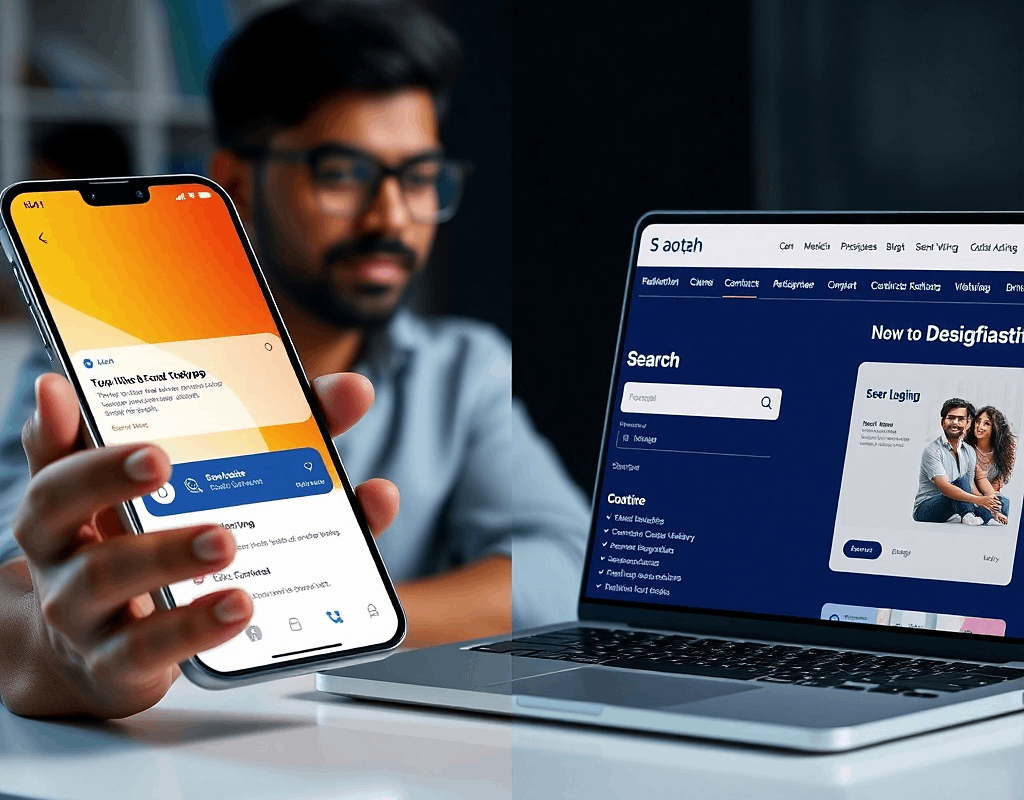
In today’s digital-first economy, businesses often face an important decision: Should we build a mobile app or start with a website?
Both platforms play crucial roles in reaching customers, driving engagement, and generating revenue. However, investing in the wrong one at the wrong time can waste resources and delay growth.
Understanding when a business truly needs a mobile app versus when a website is enough can help entrepreneurs make smarter technology investments.
The Role of Websites in Modern Businesses
A website is usually the foundation of a company’s digital presence. It acts as the primary hub where customers can learn about products, services, pricing, and brand credibility.
Websites are ideal for businesses that want to:
- Establish an online presence quickly
- Reach users across all devices (desktop, tablet, mobile)
- Share information about products or services
- Capture leads or inquiries
- Enable online purchases without requiring app downloads
For many startups and small businesses, a website is the best starting point because it offers broad accessibility and lower development costs compared to mobile apps.
Example: Ecommerce Brands Starting Online
Many ecommerce brands begin with a responsive website or online store. This allows them to validate demand, build traffic, and generate sales before investing in a mobile app.
Websites work well for ecommerce businesses because:
- Customers can shop directly through browsers
- Products are easily discoverable through search engines
- Marketing campaigns can drive traffic to landing pages
Only after reaching consistent sales volume do many ecommerce brands consider launching a mobile app to improve retention and loyalty.
When a Mobile App Becomes a Strategic Advantage
Mobile apps offer features that websites cannot fully replicate. They allow businesses to deliver faster performance, deeper personalization, and stronger user engagement.
A business should consider investing in a mobile app when:
- Customers interact with the platform frequently
- Push notifications can increase engagement
- Speed and convenience are critical
- The service relies heavily on mobile usage
- The business model benefits from user retention
Mobile apps are especially valuable for platforms where daily or frequent interaction is expected.
Example: Delivery and On-Demand Businesses
Food delivery, grocery delivery, and ride-hailing services rely heavily on mobile apps.
Customers prefer apps for these services because they offer:
- Real-time tracking
- Faster checkout
- Saved addresses and payment methods
- Push notifications for order updates
Delivery businesses benefit from apps because they create frictionless repeat usage. Customers can place orders in seconds without needing to revisit a website each time.
Example: Subscription Platforms
Subscription-based businesses also benefit significantly from mobile apps.
Platforms offering:
- Online learning
- Fitness programs
- Streaming content
- Premium communities
often use mobile apps to increase daily engagement and customer retention.
Apps allow subscription platforms to provide:
- Personalized dashboards
- Progress tracking
- Notifications and reminders
- Offline access to content
These features make mobile apps extremely effective for businesses where customer retention is critical to revenue.
When Businesses Should Focus on Websites First
For many startups and entrepreneurs, building a website first is the smarter approach.
A website should usually come first if:
- The business is validating its market
- Traffic will come from search engines
- Marketing relies on SEO and content
- The product is new and still evolving
- Budget is limited
Websites allow companies to test business ideas quickly, gather customer feedback, and refine the product before committing to mobile app development.
When Businesses Should Invest in Both
In many successful digital businesses, websites and mobile apps work together.
A common growth strategy is:
- Launch a website first to build traffic and validate the idea
- Add a mobile app later to improve engagement and retention
- Use both platforms to create a seamless user experience
For example:
- Ecommerce brands use websites for discovery and apps for loyalty programs
- Delivery companies rely on apps for orders but still maintain websites
- SaaS platforms provide web dashboards while offering mobile apps for convenience
This combination helps businesses maximize reach while improving long-term user engagement.
Key Factors to Consider Before Choosing
Before deciding between a mobile app or website, businesses should evaluate:
User behavior
Are customers likely to interact with the platform frequently?
Business model
Does the platform rely on repeat usage or one-time visits?
Customer acquisition strategy
Will users primarily find the business through search engines?
Budget and development timeline
Mobile apps typically require more investment than websites.
By analyzing these factors, businesses can determine which platform delivers the highest return on investment.
Thinking of Launching a Platform Like This?
If you’re an entrepreneur or startup founder exploring ideas for a digital platform, marketplace, or mobile-first business, having the right technology partner can make all the difference.
At Turnkey Infotech, we help startups and growing businesses design and develop scalable digital products built on the right technology architecture.
Our team works closely with founders to transform ideas into fully functional platforms, including:
- Websites and web portals
- Ecommerce platforms
- Mobile apps (iOS and Android)
- SaaS products and subscription platforms
- Marketplace platforms
- Custom business software
Building a successful digital product requires the right strategy, user experience, and development expertise.
If you’re exploring an idea or planning to launch a new platform, we’d be happy to help you evaluate the concept and understand how it could be built.
Request a Free Demo or Book a Free Consultation to discuss your idea with our team and explore the possibilities. 🚀