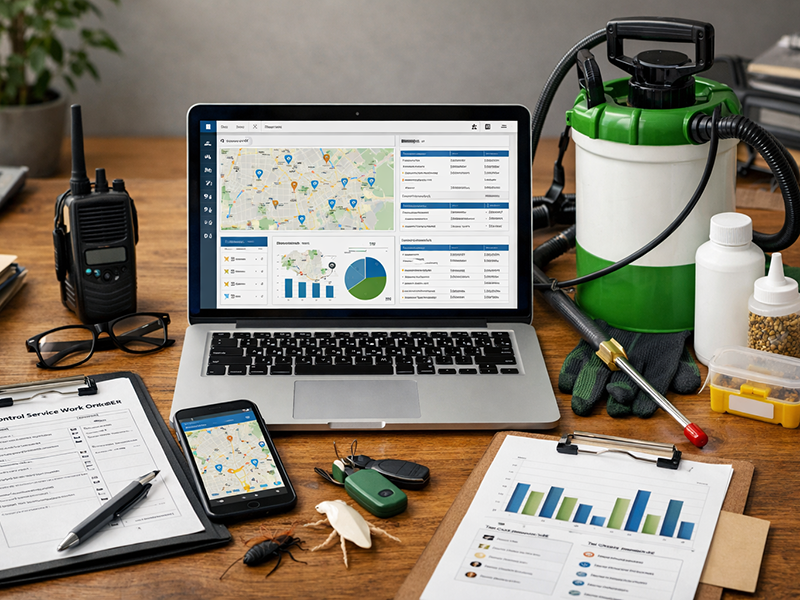
In today’s competitive pest control industry, managing customer relationships effectively is just as important as delivering high-quality services. Whether you’re handling termite inspections, rodent control, or recurring cockroach treatments, keeping track of customer data, service history, and follow-ups can quickly become overwhelming without the right tools.
This is where pest control CRM software comes in. A well-designed CRM (Customer Relationship Management) system helps pest control businesses centralize operations, automate workflows, and build long-term customer relationships—ultimately driving growth and retention.
In this guide, we’ll explore how pest control CRM software works, the key features it offers, and how it transforms everyday operations for pest control companies.
What is Pest Control CRM Software?
Pest control CRM software is a specialized digital solution designed to help pest control businesses manage customer interactions, service records, scheduling, billing, and communication—all in one place.
Unlike generic CRM systems, pest control CRM platforms are tailored to industry-specific needs such as:
- Tracking recurring treatments
- Managing technician visits
- Logging pest infestation history
- Automating service reminders
- Handling invoices and payments
Why Pest Control Businesses Need CRM Software
Traditional methods like spreadsheets, paper records, or disconnected systems lead to inefficiencies, missed follow-ups, and poor customer experiences.
A CRM system solves these challenges by:
- Centralizing all customer data
- Reducing manual errors
- Improving response times
- Enhancing customer satisfaction
- Increasing repeat business
Key Features of Pest Control CRM Software
1. Customer Data Management
A CRM acts as a centralized database where all customer information is stored and easily accessible.
What it includes:
- Contact details (name, phone, email, address)
- Property type (residential, commercial, industrial)
- Pest issues reported
- Service preferences
With this data, pest control companies can personalize their services and communicate more effectively with customers.
2. Service History Tracking
Keeping a detailed record of past services is crucial for delivering consistent and effective pest control solutions.
CRM systems track:
- Previous treatments (e.g., termite, bed bugs, rodents)
- Chemicals or methods used
- Technician notes and observations
- Before-and-after service reports
For example, if a customer calls about recurring termite activity, the team can quickly review past inspections and treatments to decide the next steps.
3. Recurring Treatment Scheduling
Many pest control services require periodic visits—monthly, quarterly, or annually.
A CRM system allows businesses to:
- Set up recurring service plans
- Automatically schedule future visits
- Assign technicians in advance
- Send reminders to customers
Example:
A restaurant may require monthly cockroach control. The CRM ensures that each visit is scheduled automatically without manual intervention.
4. Automated Follow-Ups and Reminders
Customer follow-ups are critical for retention but are often missed when handled manually.
CRM software automates:
- Service reminders (before scheduled visits)
- Follow-up messages (after service completion)
- Renewal notifications for annual contracts
- Feedback requests
This ensures consistent communication and builds trust with customers.
5. Technician Management
Efficient technician allocation is key to operational success.
CRM systems help:
- Assign jobs based on location and availability
- Provide technicians with job details and history
- Track job status (pending, in progress, completed)
- Monitor productivity and performance
Technicians can also update job details in real time using mobile apps, ensuring accurate and up-to-date records.
6. Invoicing and Billing
Managing invoices manually can lead to delays and errors.
With CRM software, pest control companies can:
- Generate invoices instantly after service completion
- Track payment status
- Send automated payment reminders
- Accept digital payments
This speeds up cash flow and reduces administrative workload.
Typical CRM Workflow for Pest Control Companies
To understand how powerful a CRM system can be, let’s walk through a typical workflow:
Step 1: Lead Capture
A customer contacts the company via phone, website, or social media. Their details are entered into the CRM.
Step 2: Inspection Scheduling
The team schedules an inspection visit and assigns a technician.
Step 3: Service Execution
The technician performs the inspection or treatment and updates the CRM with findings and actions taken.
Step 4: Service Logging
All service details are stored, including pest type, treatment method, and recommendations.
Step 5: Invoice Generation
An invoice is generated and sent to the customer automatically.
Step 6: Follow-Up Automation
The CRM sends a follow-up message to ensure customer satisfaction.
Step 7: Recurring Scheduling
If the service requires repeat visits, future appointments are automatically scheduled.
How CRM Software Improves Customer Retention
Customer retention is critical in the pest control business, where recurring services generate consistent revenue.
Here’s how CRM software helps:
1. Personalized Customer Experience
By accessing service history and preferences, businesses can tailor their services and communication.
2. Timely Service Reminders
Automated reminders ensure customers never miss scheduled treatments.
3. Consistent Follow-Ups
Regular follow-ups show customers that the company cares about their satisfaction.
4. Faster Issue Resolution
With all data readily available, customer complaints can be addressed quickly and effectively.
5. Loyalty and Trust Building
A smooth, professional experience encourages customers to stay long-term and recommend services to others.
Real-World Use Cases
Termite Control
- Annual inspections scheduled automatically
- Treatment history stored for future reference
- Renewal reminders sent before expiry
Cockroach Treatments
- Monthly service plans managed seamlessly
- Technician visits tracked and logged
- Customer notifications sent before each visit
Rodent Control
- Follow-up inspections scheduled after initial treatment
- Progress tracked through technician notes
- Preventive maintenance reminders sent
Benefits of Using Pest Control CRM Software
Implementing a CRM system offers multiple advantages:
- Improved Efficiency: Automates repetitive tasks
- Better Organization: Centralized data management
- Enhanced Communication: Timely updates and reminders
- Higher Revenue: Increased repeat business
- Scalability: Easily manage growing customer base
Choosing the Right Pest Control CRM Software
When selecting a CRM solution, look for:
- Industry-specific features
- Mobile accessibility for technicians
- Automation capabilities
- Integration with payment systems
- User-friendly interface
- Customizable workflows
A well-built platform tailored to pest control operations can significantly improve both productivity and customer satisfaction.
Conclusion
Pest control CRM software is no longer a luxury—it’s a necessity for businesses looking to grow and stay competitive. By managing customer data, automating workflows, and improving service delivery, CRM systems empower pest control companies to build strong, long-term relationships with their customers.
If you’re looking to streamline your operations and enhance customer retention, now is the time to adopt a modern CRM solution.
👉 Ready to transform your pest control business? Request pricing or book a demo today to see how a powerful CRM platform can simplify your operations and boost growth.
Thinking of Launching a Platform Like This?
If you’re an entrepreneur or business owner inspired by solutions like pest control CRM software, building a platform like this requires more than just an idea—it needs the right technology, architecture, and execution.
Turnkey Infotech helps startups and businesses design and develop scalable digital products tailored to their vision.
We can help you build:
- Websites
- Ecommerce platforms
- Mobile apps
- SaaS platforms
- Marketplace platforms
- Custom software solutions
Whether you’re validating an idea or scaling an existing product, having the right development partner makes all the difference.
👉 Book a Free Consultation or Request a Demo to explore how your platform idea can be brought to life.